
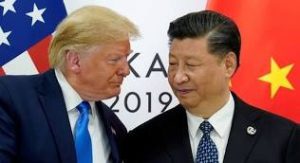
New Delhi: US President Donald Trump has extended the tariff deadline for another 90 days amid the ongoing trade dispute with China. A White House official informed CNBC about this on Monday.
The move comes after the recent trade talks between the US and China in Stockholm and is aimed at reducing tensions between the two countries. The tariff ceasefire between Beijing and Washington was scheduled to expire at 12:01 am on August 12.
Earlier, after talks in Geneva in May, both countries had agreed to suspend most tariffs for 90 days. After talks in Stockholm last month, there were indications that the tariff deadline could be extended.
This extension comes just before the 90-day trade agreement expires on August 12. If this deadline was not extended, US tariffs would have gone back to their highest level imposed in April on goods coming from China.
In May, the two countries agreed to suspend tariffs after talks in Geneva, under which the US reduced the tariff on Chinese goods to 30%, while China reduced it to 10% on US products. China resumed exports of rare earth magnets.
Markets will get relief, the way forward is open
The extension of the tariff deadline has reduced the immediate fear of escalation of tensions in global markets. Earlier, earlier this year, the US had raised tariffs on Chinese imports to 145%, in response to which China banned the export of rare earth metals important for US manufacturers.
This extension will give both countries additional time to resolve several pending issues. These issues include US tariffs related to fentanyl smuggling and concerns over China’s purchase of sanctioned Russian and Iranian oil.
The 90-day extension also raises the possibility that Trump may travel to China in late October to meet President Xi Jinping. The visit could take place during an international summit in South Korea, which Trump is scheduled to attend.
Dispute still remains over AI chip sales
Though the tariffs have been raised, differences remain over the sale of AI chips. Trump recently loosened some export controls, leading Nvidia and AMD to agree to pay 15% of some Chinese AI chip revenues to the US government in order to get export licenses.
Trump indicated that Nvidia might be allowed to sell a slightly altered version of its most advanced AI chips to China, but in late July Chinese regulators summoned Nvidia for talks over alleged security flaws in its H20 chips, fuelling mistrust in the tech sector.
The extension is part of a broader strategy by the Trump administration to impose reciprocal tariffs and sector-specific taxes on a number of countries. Currently, 20% of the US tariff is related to fentanyl trafficking, while 10% is the baseline tariff that has been in place since Trump’s first term.
Share:













Indore (HO)
Bhopal
Jabalpur


©2026 Agnibaan , All Rights Reserved