
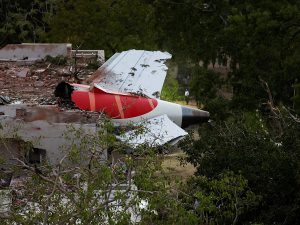
Ahmedabad. On June 12, 2025 at 1:38 pm, the accident of Air India flight AI171 (Boeing 787-8, VT-ANB) in Ahmedabad gave an opportunity to understand how a small technical or operational error during takeoff can turn into a major plane crash, that too when both the pilots (Captain Sumit Sabharwal and First Officer Clive Kunder) were experienced and the weather was absolutely clear (temperature 43°C, no bad weather).
What is a configuration error?
Configuration error at the time of takeoff means a mistake in the settings of the aircraft, which prevents it from flying properly. This includes mistakes such as incorrect setting of flaps, low thrust, premature takeoff (rotation), or failure to raise the landing gear. All of these things affect the plane’s ability to take off and hold altitude, which can cause the plane to stall or lose control.
Understanding the accident
The plane: Boeing 787-8 Dreamliner, a state-of-the-art, long-haul aircraft fitted with GE GEnx engines.
Flight: Ahmedabad to London Gatwick, a distance of about 4,200 km. The plane was fully fueled.
Conditions: Clear weather, 43°C temperature, runway just 180 feet above sea level. The air was thin due to heat, which reduces lift and thrust.
Accident: The plane crashed in Meghani Nagar (a residential area of Ahmedabad) 5–9 minutes after takeoff. The plane could reach a height of only 825 feet and its speed was only 174 knots (320 km/h), whereas 787 needs a speed of at least 200-250 knots at this weight. In the crash video, the landing gear (wheels) of the plane was visible down, which should not happen during takeoff.
Why is configuration error being considered the biggest reason?
Takeoff is the most risky part of the flight. Correct flaps, thrust and rotation speed (Vr) are very important. In hot weather, the scope of error becomes even less.
Possible mistake: If the flaps are applied very less (eg Flaps 0), then it becomes difficult for the plane to generate lift. On the other hand, more flaps (eg Flaps 20) increase the drag so much that the plane is unable to go up. In hot weather like Ahmedabad, pilots have to keep very precise settings. If the flaps were chosen wrongly here, then the plane would not have been able to get the right height.
Human error: The pilots may have gotten confused by an alert or ATC message or may not have been able to cross-check each other properly. Even though Boeing 787 has an electronic checklist, it can be ignored in haste or pressure.
Decrease in thrust
The power of the engine decreases due to heat, so it is very important to set the correct thrust for takeoff. If the pilots had mistakenly selected a lower thrust (Derated Thrust) or entered the wrong calculation of the weight, the plane would not have been able to go up quickly. The plane also needed extra power due to the heavy fuel being loaded.
What happened in the Ahmedabad incident: This 787 plane was going on a long distance flight and its weight was almost up to the full limit (227 tonnes). There may have been a problem in the Flight Management System (FMS) or the pilots may have made a mistake in setting the thrust (engine power), due to which the plane could not get the required power to take off. This would have led to the plane’s low speed (174 knots) and altitude.
The situation could have been worse had the plane taken off from the middle of the runway (intersection takeoff) rather than the full 3,600 metres, as there would be less room for error.
Human factors: Pilots usually rely on data entered in the FMS to determine engine power. But if information such as weight, temperature or runway length is entered incorrectly, the engine produces less power. Fatigue or pressure to take off early (such as running out of time) can also be a factor – even if the pilots are as experienced as Sabarwal and Kunder.
Premature rotation
Rotation means raising the nose of the aircraft during takeoff so that the aircraft can lift off the ground. This is done at the set speed (Vr), which for aircraft like the 787 is usually 140-160 knots (depending on the weight). If the aircraft tries to lift off before this speed, the aircraft does not get enough lift (lifting force). This can lead to the tail of the aircraft hitting the runway or the aircraft becoming unstable in the air and crashing, especially if the speed remains low even after takeoff.
What happened in Ahmedabad: The recorded speed of the aircraft (174 knots) suggests that the pilots may have tried to lift off before the set speed, due to which it could not reach the required speed (200-250 knots).
The heat in Ahmedabad also reduced the lift of the aircraft, due to which it had to cover a longer distance on the ground. If the pilots did the rotation early, this is why the plane was struggling to gain altitude (only 825 feet). The landing gear (wheels) were down, which suggests that the pilots did not start the process of taking the plane to climb – perhaps due to some sudden emergency.
Human factors: If the Vr (speed of rotation) is set wrongly due to wrong weight or temperature entry, or the pilots have not read the speed meter properly, then he may try to lift the plane early. Also, if the co-pilot (first officer) does not stop the captain’s mistake (lack of CRM i.e. crew resource management), then this mistake can cause a major accident.
Landing gear not raised
After takeoff, the wheels are raised so that the drag is reduced and the plane can climb easily. The wheels were seen down in the video of the accident, which means either the pilots forgot about them, or it was done deliberately due to some emergency. But this further weakened the speed and climbing ability of the aircraft.
Human factors: Pilots may forget to raise the landing gear due to some distraction (such as a stall alert or engine trouble). Or the pilots may have deliberately kept the gear down so that they could quickly get back on the runway if needed. But the MAYDAY call and the accident suggest that they had run out of time.
Crew resource management (CRM) glitch
Proper CRM means that both pilots communicate clearly and proceed only after checking each other’s statements. If Captain Sabarwal made a wrong setting like flaps or thrust and First Officer Kunder did not check it properly, the mistake could not have been noticed. Sometimes in some airlines, juniors hesitate to say anything due to the high respect for senior pilots. However, Air India’s training system is according to ICAO (international standard).
It is clear from the MAYDAY call that the pilots had sensed a major problem, but the accident happened in just 5–9 minutes, which suggests that perhaps the team was unable to take a timely decision or the coordination was poor.
Reliance on automation
The 787’s flight management system (FMS) performs calculations for takeoff, but if incorrect information (such as weight or temperature) is entered, the calculations can go wrong. Sometimes pilots trust the machine in haste and don’t double-check the results. Although modern planes like the 787 rarely fail, if the system malfunctions, pilots still have to take over manually.
Environmental stress
In the 43°C heat, pilots may experience physical problems (such as dehydration) that can gradually affect decision-making. Long shifts or scheduling pressures (which are common on long-haul flights) can also cause fatigue, which can reduce alertness.
While there is no definitive evidence of fatigue, the suddenness of the accident suggests that a major error was not corrected in time – it is possible that the pilots were not as alert as needed at the time.
Other possibilities
Pilot error or takeoff error (70–80%)
The plane’s very low altitude (825 feet), low speed (174 knots), and landing gear down clearly indicate that there was a major error in the takeoff settings (such as incorrect flaps set, low engine power, early rotation, or failure to raise gear after takeoff). The 43°C heat and heavy fuel load made the situation even more difficult, causing even a small mistake to become a major disaster.
Engine failure or bird strike (10–15%)
The video of the accident does not show engine noise and the MAYDAY call suggests that the plane was lacking thrust. Ahmedabad is also prone to bird strikes or there could have been a technical fault in the engine. But failure of both engines simultaneously is a very rare event (1 in 10 lakh). The 787’s GEnx engines are very reliable. Pilot error seems more likely given the wrong position of the plane.
Performance degradation due to hot weather (5–10%)
The 43°C heat reduced the plane’s lift and power, requiring precise takeoff settings. However, this cannot be the sole cause of the accident, as planes like the 787 are designed for hot, high altitudes. The FMS system takes temperature into account. Of course, this problem would have been exacerbated if the entire runway was not used (intersection takeoff). Still, pilot error appears to be the most obvious cause.
Technical or structural failure (2–3%)
A technical or structural failure could have caused the sudden drop, but the 787 has an excellent safety record and no such incident has occurred before. The condition of the plane (low speed, gear down) suggests that this was caused by human error, not a sudden technical failure.
Conspiracy or terrorist attack
There is no information or evidence that any kind of conspiracy or terrorist attack is involved in this incident.
Any other incident on the runway (1%)
The plane had flown up to 825 feet, so there is no possibility of an incident like hitting the runway. The air traffic control (ATC) system prevents these risks in advance.
So what is the cause of the accident?
In the Ahmedabad accident, due to the low altitude (825 feet), low speed (174 knots) of the Boeing 787-8, and the gear down, it is most likely that there was a major error in the settings of the aircraft during takeoff (such as wrong flaps, low engine power, early rotation or not putting the gear up). The probability of this is considered to be 70-80%.
The 43°C heat made the situation worse, which made the pilot’s mistake even more serious. Engine failure (10–15%) or heat-related problems (5–10%) are other possible causes, but the main culprit appears to be a takeoff error.
Share:








Indore (HO)
Bhopal
Jabalpur


©2026 Agnibaan , All Rights Reserved