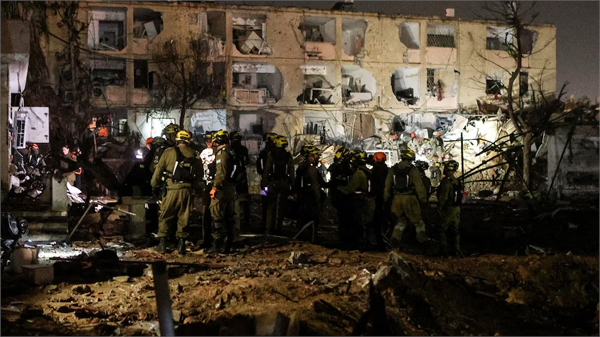


Desk: Amidst the ongoing conflict involving Iran, the U.S., and Israel, a strange and startling stir is unfolding within the world of Artificial Intelligence (AI). At a time when missiles are raining down, American AI companies are actively seeking experts in chemical weaponry. They are currently engaged in recruiting specialists in high explosives and radiation. The question arises: why, exactly, would a company that develops computer software require experts in bombs and chemical weapons? Is a massive threat standing right on our doorstep? The answer is—yes.
AI firm Anthropic and OpenAI—the creator of ChatGPT—are deeply apprehensive that their own high-tech capabilities could potentially instruct terrorists, anti-social elements, or hostile nations on how to manufacture chemical, biological, or radiological weapons—specifically, “dirty bombs.” Driven by this fear, these companies are now hiring weapons experts—offering substantial salaries—to ensure they can render the security protocols of their AI models absolutely impenetrable.
Recently, Anthropic posted a job advertisement on LinkedIn and other employment portals. The company has opened a position for a “Policy Manager” specializing in chemical weapons and high-yield explosives. The advertisement explicitly states that any applicant must possess a minimum of five years of professional experience in the field of chemical or explosive defense. Furthermore, the candidate is required to demonstrate a deep understanding of radiological delivery devices.
Anthropic has clarified that this position was created specifically to bolster its internal safeguards. The company emphasizes that its objective is, under no circumstances, to develop weapons itself. She wants to ensure that no other user can extract sensitive information regarding the manufacture of weapons using the AI tool ‘Claude.’ The company stated that this position is similar to other roles previously created to safeguard other sensitive domains.
AI models have become so sophisticated today that they can provide answers to highly complex queries related to science, chemistry, and coding within just a few seconds. While it might be difficult for an average person to sift through thousands of scattered research papers on the internet to find the precise method for constructing a bomb, a high-tech AI can aggregate all that information in one place, simplify it into accessible language, and compile a dangerous guidebook. Companies fear that if their security protocols are not robust, this knowledge could very easily fall into destructive hands.
Share:













Indore (HO)
Bhopal
Jabalpur


©2026 Agnibaan , All Rights Reserved