
New Delhi. When Pakistani drones were shot down by air missiles during the four-day military clash between India and Pakistan, the sky not only filled with the light of explosions, but Delhi also got a glimpse of a “new approach” to war. India is now hoping that the demonstration of its war capabilities, including the indigenously developed “invisible shield” missile defense system, will increase the global demand for its weapons.
Indian Defense Minister Rajnath Singh said in August, “This campaign was a symbol of a new art of war, a new approach, technological progress and self-reliance.” Once one of the world’s largest arms importers, India now intends to present itself as a major arms manufacturer and exporter. India’s defence exports reached a record $2.8 billion in 2024-25, still well below the big players but 12 per cent higher than last year and 34 times higher than a decade ago. Are India, Pakistan fighting a proxy war of big powers?
Faster and cheaper weapons
Domestic defence production also reached a record $18 billion, nearly doubling in five years. According to the defence ministry, India now exports defence equipment to more than 100 countries, with the US, France and Armenia among the top buyers. Exports range from missiles, boats and artillery to radar systems, rocket launchers, software and electronic equipment. Currently, India sells mostly small arms, bullets and parts, but the government aims to double arms exports to $6 billion by 2029. India had set a target of $3.5 billion in 2023-24, but it fell short by about one-third. Still, it is much higher than the $230 million 10 years ago.
India wants to replace Russia in arms sales
The demand for arms is high in the world and countries with weak economies do not have the money to buy weapons. In such a situation, India is presenting itself as a cheap producer. Indian companies are making 155 mm artillery shells for 300 to 400 dollars. In Europe, the same shells sell for more than 3,000 dollars. India has sold howitzers for $3 million, which is half the European price. The clash between India and Pakistan in May was the most serious clash between the nuclear-armed neighbors since 1999. More than 70 people were killed in the firing from missiles, drones and artillery. Both countries claimed victory and also claimed to have shot down each other’s fighter planes. A senior Indian Army official said the clashes had provided a “very good understanding” of the performance of the new weapons. “These were golden experiences for our fast-growing industrial partners,” he told news agency.
Has the conflict with Pakistan opened up markets for India?
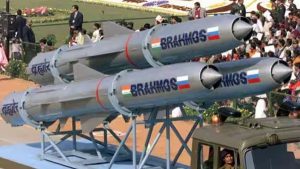
The weapons tested in the conflict with Pakistan included the Akash Tir, or “Sky Arrow”, a mobile air defence platform that operates with artificial intelligence and is capable of intercepting missiles and combat drones. India also fired several long-range BrahMos cruise missiles at Pakistani air bases during the military clash. The missiles, jointly developed with Russia, have already been exported to the Philippines and have gained more attention after the clash. “These BrahMos missiles have performed brilliantly, so 14-15 countries have shown interest in buying them,” Rajnath Singh said at the inauguration of a military factory in July. Ashok Malik of the Asia Group consultancy said the dispute has proved “like a market opener”. “For me it is one thing to buy something you have made, but it is quite another thing to buy something you have made and used successfully on the battlefield,” he said.
India’s rapidly growing defence budget
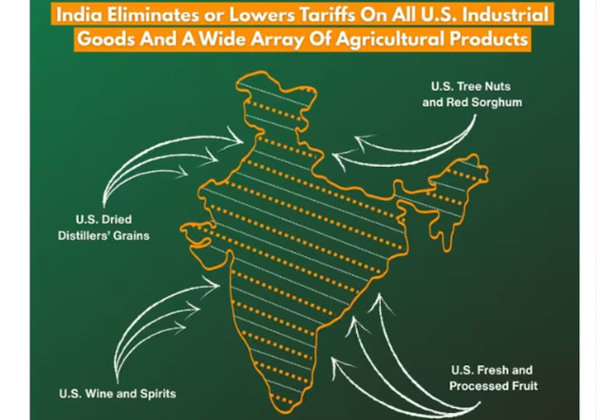
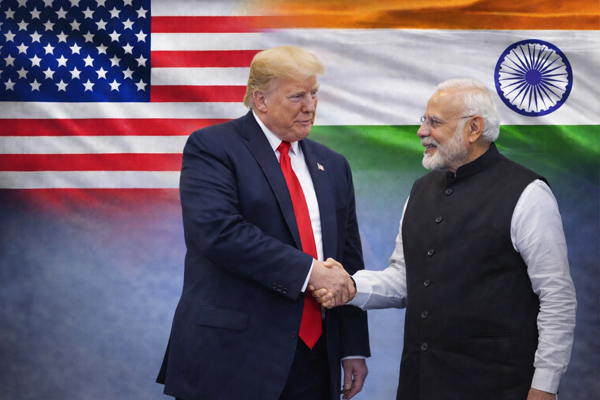
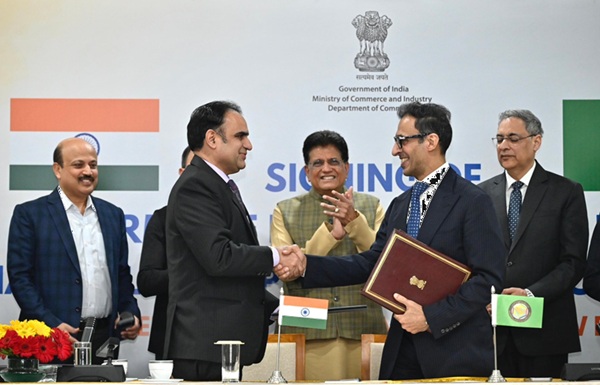
India’s defence budget has more than doubled in the past decade to $78 billion. Meanwhile, India has sought to reduce its dependence on Russian arms and has signed import and production deals with the US, France and Israel. The industrial development drive comes at a time when New Delhi is trying to balance ties with Washington and Moscow as well as competing with China, Pakistan’s biggest arms seller. This balance has become more difficult when Washington imposed a 50 per cent import duty on Indian products.
India has also focused on its fast-growing drone sector, which is estimated to be worth $11 billion by 2030, with many models being developed in collaboration with Israeli companies. Earlier, India itself used to buy Sukhoi fighters from Russia or howitzers from the US. To deal with its two nuclear neighbours Pakistan and China, it needs big weapons. Small weapons have been manufactured in India since long but now private sector companies are increasing the production of weapons. These include modern high-tech weapons as well.
Share:











Indore (HO)
Bhopal
Jabalpur


©2026 Agnibaan , All Rights Reserved