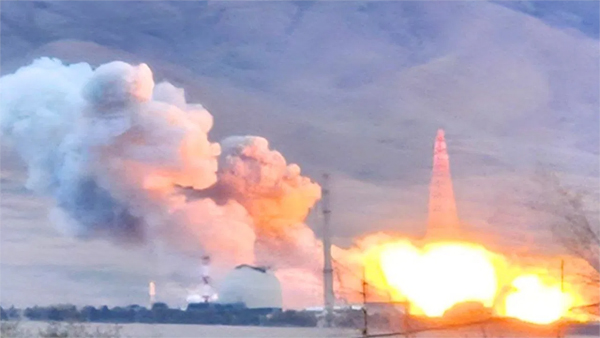

New Delhi: North Korean dictator Kim Jong Un has once again sent shockwaves through the world—particularly the United States. According to state media, North Korea successfully conducted a test of a high-thrust, solid-fuel engine on Sunday.
With the aid of this new engine, North Korea is now moving closer to developing missiles capable of directly targeting the United States. Kim Jong Un personally supervised this “ground jet test.” According to reports, the newly upgraded engine utilizes composite carbon fiber materials.
The maximum thrust of this engine was measured at 2,500 kilotons—significantly higher than the 1,971 kilotons recorded during a test conducted last September. Defense experts believe that the primary objective behind boosting the engine’s power is to enable the deployment of multiple warheads on a single missile, thereby allowing them to easily evade U.S. defense systems.
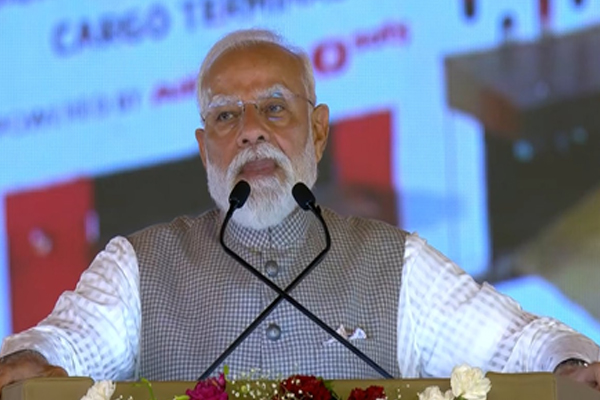
This test comes shortly after a speech by Kim Jong Un in which he declared North Korea an “irreversible” nuclear power. Accusing the United States of “global terrorism and aggression,” Kim also made reference to conflicts in the Middle East. He stated that this test was “critically necessary” to elevate the country’s strategic military capabilities to a robust level.
Missile Capabilities
North Korea is continuously modernizing its intercontinental ballistic missile technology. The greatest threat posed by solid-fuel missiles is that the likelihood of intercepting them prior to launch is extremely low, as they do not require the extensive preparation time typically associated with liquid-fueled missiles. This development is part of North Korea’s five-year military expansion program.
This move by North Korea comes at a time when the world is already grappling with several major conflicts. This test could further escalate tensions with the United States and its allies. Experts say that if North Korea further advances its missile technology, it could pose a new challenge to global security. In particular, multiple-warhead capabilities and solid-fuel technology could prove to be significant challenges for missile defense systems.
Share:












Indore (HO)
Bhopal
Jabalpur


©2026 Agnibaan , All Rights Reserved