
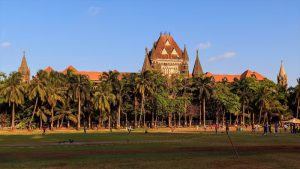
Mumbai: Bombay High Court on Monday gave a historic verdict in the case of the horrific Mumbai local train blasts that took place on 11 July 2006. The High Court has acquitted 11 of the 12 accused convicted by the lower court in this case from all charges. One accused died during the appeal process. This verdict has come after 19 years.
The special bench of the High Court said in the verdict that ‘the evidence presented in the case was not reliable’ and ‘the testimony of many witnesses was under suspicion’. The court also admitted that the accused were forcibly interrogated and their statements were taken, which are not legally valid.
The court said, ‘The prosecution was completely unsuccessful’
The court said that there were serious flaws in the evidence presented against the accused. The arguments of the defence challenging the identification parade were considered justified. Some witnesses remained silent for years and then suddenly identified the accused, which is ‘unusual’. Many witnesses had appeared in such cases earlier, which raised questions on their credibility. No concrete scientific evidence was presented regarding the recovery of alleged RDX and other material.
‘The evidence was not strong’
The court said, ‘The testimony, investigation and evidence were not strong. The accused were successful in proving that confessions were forcibly taken from them.’ The judges said, ‘We have done our duty. It was our responsibility.’ At the same time, the convicts connected through video conferencing were seen crying from the jails of Amravati, Nashik, Nagpur and Pune. No one expressed happiness, everyone had tears in their eyes.
Public Prosecutor called the verdict ‘guiding’
Senior advocate Yug Mohit Chaudhary, who appeared on behalf of the accused in this case, said, ‘This verdict is a ray of hope for all those who have been waiting for justice for years.’ Public Prosecutor Raja Thakare also called the verdict ‘guiding’.
That dark day of 2006
On 11 July 2006, 189 people lost their lives and 827 passengers were injured in the blasts that took place at seven places within 11 minutes in Mumbai’s local trains. ATS investigated the case and arrested 13 people under stringent sections like MCOCA and UAPA, while 15 others were reported absconding, some of whom were said to be in Pakistan.
The journey of trial and appeal
In 2015, the special court convicted 12 accused. 5 were sentenced to death and 7 to life imprisonment. The state government then filed a petition in the High Court to confirm the death sentence, while the accused filed an appeal challenging their sentence and conviction.
The case kept getting delayed for a long time as the amount of evidence was excessive. In 2023, an accused named Ehtesham Siddiqui filed a petition in the High Court to expedite the hearing of the appeal. After this, a special bench was constituted, which heard the case continuously for about 6 months and then worked on the verdict for 6 months.
Share:












Indore (HO)
Bhopal
Jabalpur


©2026 Agnibaan , All Rights Reserved