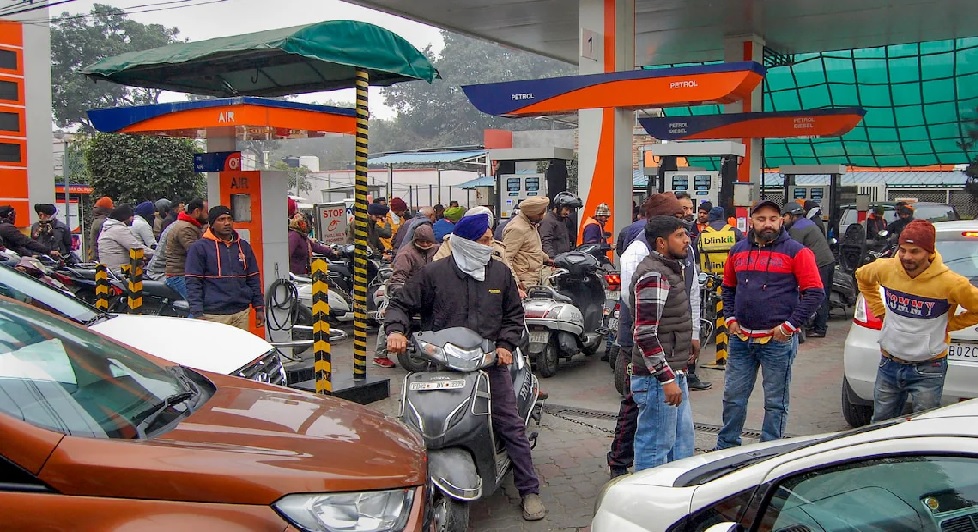

New Delhi: For the public grappling with rising petrol and diesel prices across the country, the Central Government has devised a significant strategy following a substantial reduction in the Special Additional Excise Duty on both fuels. The government has now decided to review fuel prices and the status of the international market every 15 days.
The government’s objective is to ensure that the benefits of any fluctuations in global crude oil prices reach the pocket of the common man directly. Following a reduction of ₹10 per liter on both fuels, the total Central Excise Duty now stands at ₹11.9 per liter on petrol and ₹7.8 per liter on diesel.
What is the Government’s New Plan?
This change has come into effect immediately. After reducing the excise duty on petrol and diesel, the government has now adopted a “wait and watch” approach. The government clarified that this reduction will not have any impact on retail petrol and diesel prices. Vivek Chaturvedi, Chairman of the Central Board of Indirect Taxes and Customs (CBIC), stated during a press briefing that this step was taken to address the “under-recoveries” faced by oil marketing companies, which were caused by a surge in global crude oil prices and supply disruptions. This measure will allow the government to maintain control over price fluctuations and, if necessary, further balance the rates.
Why Was This Decision Taken?
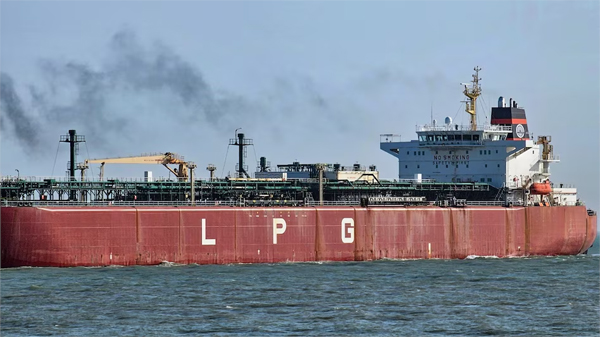
Currently, the ongoing conflict between the US-Israel and Iran has impacted the energy infrastructure in the Middle East. Iran imposed a blockade on the Strait of Hormuz, causing the price of the global benchmark, Brent crude, to surge from $68 per barrel on February 28 to over $100 on March 7. By Friday afternoon, the price hovered around $110 per barrel. The Strait of Hormuz serves as a transit route for 20–25% of the world’s seaborne crude oil and gas. India imports 40–50% of its crude oil via this route. A significant portion of LNG and LPG from Qatar and the UAE also arrives through this channel, which is vital for over 330 million households.
No Immediate Shortage of Oil or Gas
The government has provided assurances that there is no immediate shortage of oil or gas. Sujata Sharma, Joint Secretary at the Ministry of Petroleum and Natural Gas, stated, “We are currently in a war-like situation. Supplies of crude oil, LPG, and LNG have been impacted; however, we possess adequate inventory, and supply lines for the next two months have already been lined up. The situation regarding LPG and LNG remains comfortable. Refineries are operating at over 100% capacity, and commercial supplies have been restored to 70% over the past few weeks.”
The Government’s Prudent Strategy
Vivek Chaturvedi noted that a sharp surge is being observed in the prices of crude oil, petrol, diesel, and Aviation Turbine Fuel (ATF). The government has adopted a calibrated approach. A Special Additional Excise Duty and Cess have been imposed to regulate the export of diesel and ATF. The rates for petrol and diesel will be reviewed every 15 days. This will facilitate the making of prompt decisions in response to prevailing market conditions. Retail prices will not undergo any changes for the time being.
Share:












Indore (HO)
Bhopal
Jabalpur


©2026 Agnibaan , All Rights Reserved