
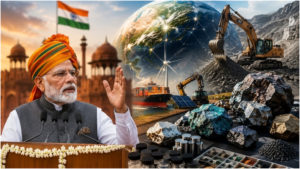
New Delhi: Prime Minister Narendra Modi, addressing the nation from the ramparts of the Red Fort on Independence Day, outlined an ambitious roadmap for a self-reliant and developed India, stressing that the world is increasingly witnessing the “weaponisation” of resources, territory, energy and technology.
Calling for continued efforts towards ‘Viksit Bharat’, PM Modi said nations can no longer afford excessive dependence on other countries for critical resources. He asserted that India must strengthen its strategic capabilities and complete pending tasks over the next five to seven years.
India Cannot Remain Dependent on Crude Oil
On energy security, the Prime Minister stressed that India cannot depend solely on crude oil and must rapidly expand alternative sources of energy.
He set an ambitious target of generating 100 GW of nuclear power by 2047. He also highlighted India’s remarkable growth in solar energy, noting that solar capacity has increased from around 2 GW 12 years ago to 160 GW today.
PM Modi said the momentum must continue as India works towards greater energy independence.
The Prime Minister also highlighted the importance of deep-sea exploration for energy and critical resources. He said India has moved away from the earlier “No-Go Sea” approach towards a “Go-Sea” strategy.
Under the ‘Samudra Manthan’ initiative, India will explore the deep sea for energy resources and other strategically important minerals. The government has committed around ₹85,000 crore to these projects, with the objective of strengthening the country’s long-term energy and resource security.
Semiconductor Mission Gains Momentum
Highlighting the strategic importance of semiconductors, PM Modi said chips have become indispensable to modern life and that disruptions in their supply can affect the global economy.
He pointed out that while semiconductor technology had emerged globally decades ago, India largely remained stuck in discussions. That, he said, is now changing.
India has begun semiconductor production, and the government expects five to eight more semiconductor plants to become operational over the next seven to eight years, strengthening the country’s position in the global chip supply chain.
India Takes Aim at China’s Rare-Earth Dominance
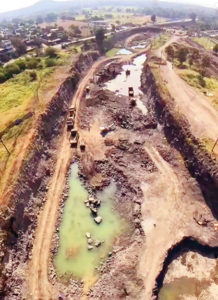
Rare earth elements and critical minerals emerged as another major focus of the Prime Minister’s address. He stressed that India must protect its strategic interests in minerals that are essential for electronics, defence, renewable energy and advanced technologies.
India is developing a critical minerals corridor and engaging with countries around the world to secure reliable supplies. According to the Prime Minister, several agreements have already been signed with partner nations.
With China dominating more than 90% of the global rare-earth market, India is looking beyond Beijing to diversify its supply chains. Countries such as Australia are emerging as important partners in India’s efforts to secure critical minerals.
The message from the Red Fort was clear: from energy and semiconductors to rare earths and deep-sea resources, India is seeking to reduce strategic dependence on foreign powers and build a more resilient, self-reliant economy.
Share:












Indore (HO)
Bhopal
Jabalpur


©2026 Agnibaan , All Rights Reserved