
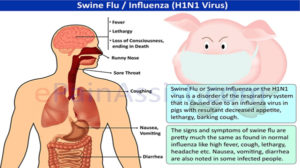
New Delhi: A surge in Influenza A(H1N1), commonly known as swine flu, has raised concern across Delhi, with the capital recording 1,777 H1N1 cases so far in 2026. According to the Delhi Health Department, 433 new H1N1 cases have been detected in the past 14 days, while hospitals are witnessing a growing number of patients reporting flu-like symptoms.
Major hospitals, including AIIMS Delhi, Safdarjung and RML Hospital, are seeing patients with fever, cough and other influenza-like symptoms. Many of those undergoing testing are subsequently found positive for H1N1.
Amid the rising cases, Union Health and Family Welfare Minister J.P. Nadda held a review meeting with Delhi Health Minister Pankaj Kumar Singh and directed authorities to strengthen influenza surveillance. The Centre has also assured Delhi of all necessary support.
But why are H1N1 cases increasing, and who needs to be particularly cautious?
Why are swine flu cases rising in Delhi?
According to Dr. Neeraj Nischal, Professor of Medicine at AIIMS Delhi, cold weather alone is not responsible for the spread of influenza.
He explained that several factors can contribute to the transmission of the virus, including increased viral circulation, reduced immunity in the population and environmental conditions that make airborne transmission easier.
These conditions can become particularly relevant during Delhi’s monsoon season. Frequent weather fluctuations, high humidity and rainfall can lead people to spend more time indoors. In air-conditioned rooms with closed doors and windows, poor ventilation can make it easier for an infected person to transmit the virus to others.
However, Dr. Nischal stressed that temperature by itself does not determine the spread of influenza. The presence of the virus in the community, along with conditions that facilitate transmission, plays an important role.
More testing could also explain the rise
The increase in reported cases may partly be linked to increased testing, Dr. Nischal said.
People who might previously have been treated for seasonal viral fever or flu without specific testing are now more likely to undergo tests for H1N1. As a result, more infections are being identified.
Therefore, the number of tests being conducted is also an important factor when comparing case figures from one period to another.
Who is most vulnerable to severe infection?
Dr. Nischal said certain groups face a higher risk of complications from influenza. These include:
– Elderly people
– Young children
– Pregnant women
– People with heart or lung diseases
– People with diabetes
– Individuals with weakened immune systems
People experiencing breathing difficulties, low oxygen levels, chest pain, confusion or unusual weakness should seek medical attention promptly.
Don’t panic, but don’t ignore symptoms either
Doctors advise people not to panic over every episode of fever, but influenza symptoms should not be ignored either.
Maintaining good hand hygiene, covering the mouth and nose while coughing or sneezing, staying home when sick and wearing a mask when appropriate can help reduce transmission. People should also avoid close contact with infected individuals.
Most importantly, experts advise against self-medication. Anyone developing persistent or significant flu-like symptoms should consult a doctor and undergo testing if recommended.
Delhi government says hospitals are prepared
Delhi Health Minister Pankaj Kumar Singh said the government is fully prepared to deal with the situation and that there is no shortage of hospital beds, doctors, medicines or essential medical equipment.
According to the Delhi government, 2,392 Influenza-A cases have been recorded in the capital so far this year. Of these, 1,777 are H1N1 cases, while 37 are H1, 138 are H3 and 440 belong to other variants.
The Delhi State Health Mission is monitoring the situation through the Integrated Disease Surveillance Programme (IDSP). Cases of influenza-like illness (ILI), severe acute respiratory infection (SARI) and influenza reported through the IDSP-IHIP portal are being tracked on a daily basis.
The government is also monitoring patient numbers and expanding hospital resources wherever required.
Centre steps up surveillance
During his meeting with Delhi’s Health Minister, Union Health Minister J.P. Nadda directed officials to strengthen surveillance and remain vigilant amid the increase in influenza cases.
The Union Health Ministry has also urged people to follow preventive measures and seek medical attention if they develop serious symptoms, particularly difficulty in breathing.
While the exact year-on-year increase has not been officially quantified by the Delhi Health Department, officials acknowledge that H1N1 cases are significantly higher this year.
With influenza cases continuing to rise, experts say the key is not panic but early diagnosis, appropriate treatment, good hygiene and extra caution among high-risk groups.
Share:












Indore (HO)
Bhopal
Jabalpur


©2026 Agnibaan , All Rights Reserved