
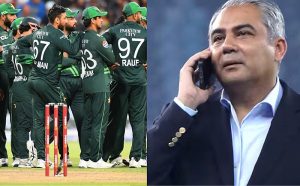
New Delhi. The crisis surrounding the high-voltage competition between India and Pakistan at the ICC Men’s T20 World Cup 2026 has now ended. Pakistan, which had threatened to boycott the match scheduled for February 15 in Colombo, has made a U-turn on its decision. To bring Pakistan to its knees, the ICC used the same tactic it had been using for nearly 10 days. Now let’s understand the full story…
Pakistan Cricket Board (PCB) chief Mohsin Naqvi may be trying to downplay this decision, but the truth is that the ICC cleverly engineered a situation that left Pakistan with no choice but to make a U-turn.
Timeline of the Drama
This controversy began in Bangladesh when Bangladesh refused to play the T20 World Cup in India. Pakistan jumped into the dispute between the BCCI and the BCB, unnecessarily escalating the matter. But when Pakistan’s efforts failed and the ICC expelled Bangladesh from the World Cup, Pakistan resorted to another tactic.
On February 1, Pakistan announced that it would play the World Cup match, but out of respect for Bangladesh, it would boycott the match against India. The Pakistani government announced this. The ICC then asked Pakistan to reconsider its decision.
The ICC Played a Trick
The ICC understood that Pakistan’s drama was merely political and that it wanted to show how much it was a well-wisher of Bangladesh. But the reality is that it wanted to humiliate India. It’s also worth noting that the BCCI took no initiative in this controversy. Now, the ICC has resorted to its own tactics to corner Pakistan. That is, they put forward the very countries whose support Pakistan was talking about.
To resolve this dispute and bring Pakistan to its senses, the ICC joined forces with Bangladesh, Sri Lanka, and the UAE.
First, the story of Sri Lanka:
Sri Lanka co-hosts this World Cup. The India-Pakistan match is also scheduled to be held in Colombo. If this match had not taken place, Sri Lanka would have suffered huge losses. In such a situation, the ICC reached out to Sri Lanka. Sri Lankan President Dissanayake personally spoke to Pakistani Prime Minister Shahbaz Sharif over the phone and appealed to him to reconsider the boycott of the India-Pakistan match. Sri Lanka recalled the two countries’ long-standing cricketing ties and their support in difficult times.
Then the UAE rebuked Pakistan
Following this, another pressure came from the UAE. The Emirates Cricket Board (ECB) wrote a letter to the PCB, reminding them how Pakistan played its home matches in the UAE during difficult times and remained in international cricket. The Board clearly stated that boycotting the India-Pakistan match was not just a matter between two countries, but would adversely impact the entire cricket ecosystem, especially the economic health of associate nations.
Then came a blow from Bangladesh.
The third and most important front was from Bangladesh. Bangladesh Cricket Board (BCB) President Aminul Islam personally traveled to Lahore and met with Mohsin Naqvi. Pakistan, which had refused to play the match against India in support of Bangladesh, now publicly appealed to Pakistan to play the match in the “greater interest of cricket.” This was a significant moral pressure for Pakistan.
Amidst these three pressures, the ICC continued to engage in back-channel negotiations. The ICC made it clear that it would not impose any sanctions on Bangladesh, would allow it to host future ICC tournaments, and its revenue share would be protected. This meant that Pakistan’s “solidarity card” ended there.
This entire incident once again demonstrated that India-Pakistan competition is not just a matter of cricket, but a pivot of the global cricket economy. Instead of direct confrontation, the ICC brought Pakistan to its knees by applying diplomatic pressure and saved the biggest match of the World Cup.
Share:











Indore (HO)
Bhopal
Jabalpur


©2026 Agnibaan , All Rights Reserved