
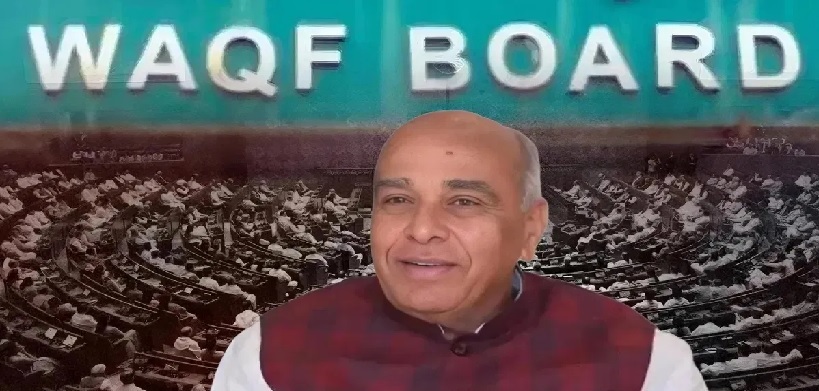
New Delhi: The JPC formed on the Waqf Amendment Bill can submit its report to the Lok Sabha Speaker on 27th or 28th January. After the approval of the Lok Sabha Speaker, the report will be presented in the Lok Sabha in the upcoming Budget Session. The JPC has been called for two consecutive days to finalize the draft of the JPC report on the Waqf Amendment Bill. This meeting of the JPC will begin tomorrow, Friday, at 11 am.
The committee has been called for consecutive meetings on Friday and Saturday (tomorrow and day after). The bill will be discussed clause-by-clause in the meeting and the draft of the report will be finalized. The JPC members were given time till 4 pm on 22 January to submit amendments to the bill by mail or physically, which has passed.
The committee has received many amendments to be included in the bill, those amendments will also be discussed in the two-day meeting and if needed, voting will be done. It is worth noting that some opposition party members of the JPC had demanded to postpone the JPC meeting to 30 and 31, which was not accepted by the JPC chairman.
Two months after the Lok Sabha passed a proposal to extend the term of the Joint Committee of Parliament on the Wakf (Amendment) Bill, it is believed that the committee may submit its 500-page report in the upcoming budget session. So far, the committee has held 34 meetings in Delhi and visited several states, where more than 24 stakeholders were called.
More than 20 Wakf boards from across the country have appeared before the committee. After objections from the opposition, the Center had sent the bill to the committee for further scrutiny. Of the 21 Lok Sabha and 10 Rajya Sabha members of the committee, 13 are from opposition parties – nine in the lower house and four in the upper house. Let us tell you that the chairman of the committee is Jagdambika Pal, who is a BJP MP from Uttar Pradesh.
He travelled to Delhi, Mumbai, Ahmedabad, Chennai, Hyderabad, Bengaluru, Guwahati, Bhubaneswar, Kolkata, Patna and Lucknow and met all stakeholders, state government officials, Wakf boards, minority commissions, high court lawyers, Islamic scholars, former judges, vice chancellors, members of the All India Muslim Personal Law Board and Jamiat Ulema-e-Hind and various tanzeems (organisations).
Share:










Indore (HO)
Bhopal
Jabalpur


©2026 Agnibaan , All Rights Reserved