

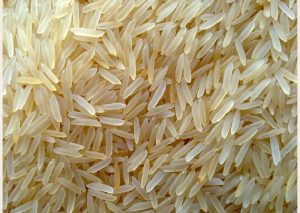
New Delhi. To rein in rising rice prices and inflation in the domestic market, the government is considering curbs on the export of non-basmati rice. Taking into account international rice prices and India’s competitive standing, the government is contemplating an export duty of up to 30% on non-basmati white rice. According to sources, even if a 20% duty is imposed, India would still be able to maintain its exports, as prices in Thailand and Vietnam are higher, with only Pakistani rice remaining cheaper.
Sources indicate that an export duty, potentially accompanied by a Minimum Export Price (MEP), could be implemented starting next month, while a temporary export ban is being kept as a last resort. However, officials believe that even if a ban becomes necessary, it would be temporary—unlike the 2023 ban, which lasted for 14 months.
Why are there calls for stricter measures?
Food inflation rose to 8.94% in October, up from 7.74% in September. Within the cereals category, inflation for rice has been steadily climbing: from 1.72% in June and 3.30% in July, it rose to 5.89% in August, 8.27% in September, and reached 12.51% in October. In October, rice inflation stood at 43.2% in Karnataka, 25.7% in Andhra Pradesh, 24.6% in Telangana, 17.4% in Tamil Nadu, and 9.4% in Kerala. Rice Exports: ₹51,500 Crore
In the 2025-26 financial year, India exported 150.4 lakh tonnes of non-basmati rice, valued at approximately ₹51,500 crore. Due to deficient rainfall in several states, the Kharif paddy acreage for 2026-27 is estimated to decline by about four percent to 426.8 lakh hectares.
Share:








Indore (HO)
Bhopal
Jabalpur


©2026 Agnibaan , All Rights Reserved