
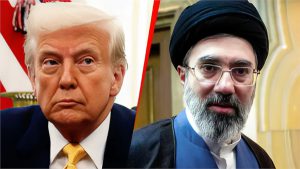
Washington: Tensions between the United States and Iran have reached a critical juncture, where a direct conflict appears to be looming between diplomacy and confrontation. Amidst this tense atmosphere, US President Donald Trump has dispatched his special envoys—Steve Witkoff and Jared Kushner—to Islamabad for a proposed second round of talks to be held in Pakistan. However, the picture regarding these negotiations remains somewhat unclear. The reason is that uncertainty still persists regarding whether US Vice President JD Vance will participate in these talks.
In this context, while Trump has sent a clear signal by dispatching Steve Witkoff and Jared Kushner to Islamabad—indicating that the decisive battle will now be fought at the negotiating table—the lingering uncertainty surrounding Vice President JD Vance’s visit to Pakistan raises significant questions regarding both the seriousness and the strategic intent of these negotiations.
Where is JD Vance? What Do the Reports Say?
It is worth noting that new information has emerged regarding JD Vance’s potential visit to Pakistan. According to the news agency Reuters, Vice President JD Vance has not yet departed from the United States. A source indicated that Vance is currently still in the US, and there has been no clear confirmation regarding his travel to Pakistan. This suggests that the preparations for the talks are not yet fully finalized.
Departure for Pakistan Possible on Tuesday
Nevertheless, several media reports suggest that JD Vance may embark on a visit to Pakistan on Tuesday, where a new round of talks concerning Iran-related issues is expected to take place. However, Iran has not yet confirmed its participation in these negotiations, leaving a degree of uncertainty surrounding the situation.
Uncertainty Persists on the Iranian Side as Well
It is not the case that the picture regarding these negotiations remains unclear solely from the American side; the situation regarding these talks also remains uncertain from the Iranian perspective. Iranian officials have indicated that they are considering participating in the talks, though no final decision has been reached yet. Previously, Iran had expressed reluctance to engage in negotiations, accusing the United States of acting in bad faith.
What are the arrangements in Pakistan?
Meanwhile, in Pakistan’s capital, Islamabad, stringent security measures have been put in place for these potential negotiations. Pakistani Prime Minister Shehbaz Sharif and Army Chief Asim Munir are playing the role of mediators throughout this entire process. Earlier, on April 11–12, a marathon session of talks lasting approximately 21 hours took place between the two sides, but it concluded without yielding any concrete results. Now, as the ceasefire deadline draws near, this second round of negotiations is being viewed as critically important.
All in all, given the uncertainty surrounding J.D. Vance’s visit and Iran’s wavering stance, it remains difficult to predict whether these talks will ultimately prove successful. The coming days will determine whether this diplomatic initiative paves the way toward peace or if the situation is destined to deteriorate further.
Share:












Indore (HO)
Bhopal
Jabalpur


©2026 Agnibaan , All Rights Reserved