
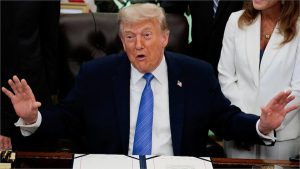
New Delhi: The United States has taken a major step toward imposing heavy economic pressure on Russia and countries that continue to purchase its oil and gas. The US Senate has overwhelmingly passed a bipartisan bill that could authorize President Donald Trump to impose a 100 percent tariff on goods imported from countries that are major buyers of Russian petroleum products.
The legislation, renamed the ‘Lindsey O. Graham Sanctioning Russia and Iran Act of 2026,’ was approved by an 86-11 vote. If enacted, the measure would give Trump sweeping authority to impose tariffs on goods from the top five importers of Russian oil and gas.
According to the legislation, China, India, Azerbaijan, Hungary and Slovakia are among the five countries targeted by the proposed tariff mechanism.
India and China in US Crosshairs
The proposed measure comes amid Washington’s efforts to restrict Russia’s energy revenues, which US lawmakers argue help finance Moscow’s war in Ukraine.
Under the bill, countries continuing to purchase Russian oil and gas could face a 100 percent tariff on their exports to the United States. The move could have significant implications for major Russian energy buyers, including India and China.
The legislation also seeks to strengthen sanctions against Russian officials, including senior political figures, wealthy oligarchs and financial institutions.
Iran Sanctions Also Extended
The bill goes beyond Russia. It also extends the sunset provision of the Iran Sanctions Act of 1996 until 2031. The law provides for penalties against companies involved in investments in Iran’s energy sector.
The legislation was championed by Republican Senator Lindsey Graham and Democratic Senator Richard Blumenthal as part of a bipartisan push to increase economic pressure on Russia and Iran.
Following Graham’s death after a visit to Kyiv, lawmakers from both parties reportedly intensified efforts to advance the legislation and preserve what they described as his commitment to supporting Ukraine.
‘Choice Between US Trade and Russian Energy’
Darlene Graham, who was appointed to succeed her late brother, said the legislation would force countries supporting Russia’s economy to make a choice between maintaining trade with the United States and continuing to purchase cheaper Russian energy.
Senator Richard Blumenthal also defended the measure after the vote, arguing that tougher sanctions and tariffs were necessary against countries and entities supporting Russia’s war effort.
Bill Now Heads to US House
The Senate vote marks an important step, but the legislation is not yet law. It will next move to the US House of Representatives, which is scheduled to reconvene on August 31.
The bill could trigger fresh debate over Washington’s trade policy, particularly because some Democrats have raised concerns that the legislation could give President Trump significantly greater authority to use tariffs as an instrument of foreign policy.
If approved by the House and signed into law, the measure could put India and other major buyers of Russian energy under substantial pressure while further reshaping global oil trade amid the continuing Russia-Ukraine conflict.
Share:













Indore (HO)
Bhopal
Jabalpur


©2026 Agnibaan , All Rights Reserved