

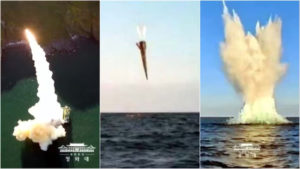
New Delhi: South Korea has reportedly conducted the first successful test of its domestically developed hypersonic glide vehicle (HGV), marking a significant development in its efforts to strengthen strategic defence capabilities. During the test, the missile reportedly reached speeds exceeding 6,174 km/h before accurately striking a designated target at sea.
According to the reported details, the hypersonic glide vehicle separated from its booster and completed its planned flight trajectory. It then descended from altitude, manoeuvring horizontally and vertically to reach its target. The test was designed to assess high-temperature-resistant materials, advanced guidance systems and flight-control technologies essential for hypersonic weapons.
South Korean President Lee Jae-myung personally witnessed the test, underscoring the programme’s strategic importance. The country views the technology as a potential strategic asset capable of delivering rapid, precision strikes against key targets on the Korean Peninsula.
The development comes amid growing concerns over North Korea’s advancing missile capabilities. Pyongyang reportedly conducted its first successful hypersonic glide vehicle test in 2022 and has continued testing and upgrading its weapons systems. Reports of two test launches in the past month have further drawn attention to the pace of its missile development.
South Korea’s reported achievement highlights the intensifying technological competition between the two neighbouring nations. Both countries are seeking to enhance their military capabilities, while advances in hypersonic weapons are raising concerns about regional security and the challenges of detecting and intercepting high-speed, manoeuvrable missiles.
As the competition continues, developments in hypersonic technology could have significant implications for deterrence, military preparedness and the broader security balance in East Asia.
Share:













Indore (HO)
Bhopal
Jabalpur


©2026 Agnibaan , All Rights Reserved