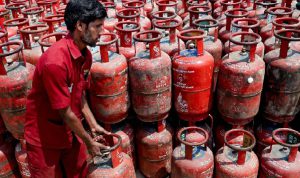
New Delhi: An energy crisis looms globally due to ongoing tensions in the Middle East. In India, too, authorities have intensified raids across various cities to curb black marketing and illegal hoarding of gas cylinders. Amidst this situation, the Ministry of Petroleum and Natural Gas has taken a significant decision.
The Ministry of Petroleum and Natural Gas has issued a new and crucial order regarding domestic gas connections. According to this order, households that already possess a Piped Natural Gas (PNG) connection will no longer be permitted to simultaneously hold a domestic LPG connection. This implies that such consumers must immediately surrender their LPG cylinder connections.
The Ministry has clarified that individuals holding a PNG connection will not be able to obtain LPG cylinder refills from government-owned oil companies or their distributors. This measure has been implemented with the objective of improving the management of domestic gas resources and making the distribution system more organized and efficient.
The government believes that allowing consumers to hold both PNG and LPG connections simultaneously leads to disparities in gas supply, potential misuse, and the unnecessary duplication of resources. Therefore, through this restriction, consumers are being required to source their gas from a single provider, thereby ensuring greater transparency and efficiency in the supply chain.
This order applies specifically to consumers whose homes are already equipped with a PNG connection. For their convenience, the Ministry has advised them to surrender their domestic LPG connections as soon as possible; failure to do so will result in the suspension of their LPG cylinder supply.
Due to the conflict between Iran and Israel in the Middle East, the Strait of Hormuz has been closed, disrupting India’s supply of LPG and natural gas. India imports a substantial portion of its LPG requirements to meet domestic demand, a situation that is currently leading to a rapid depletion of existing stocks. Major metropolitan areas like Delhi and Mumbai are witnessing long queues for gas cylinders, and several restaurants are being forced to shut down due to the acute shortage of gas. Although the supply of PNG and CNG is currently stable, the situation surrounding them remains precarious.
To alleviate concerns, the government—through Petroleum Minister Hardeep Singh Puri—has provided assurances that domestic consumers are being prioritized and that adequate stocks are available. The Minister stated that 70–80 percent of the industrial sector is currently receiving gas supplies, and sources of imports have been diversified to include other nations. Furthermore, rumors circulating regarding a fuel crisis have been declared baseless. Additionally, the government has increased the supply of kerosene under the Public Distribution System (PDS) to ensure that the needs of rural and Below Poverty Line (BPL) families are met.
To tackle the crisis, the government has taken six major steps, including boosting LPG production at refineries, streamlining the booking and supply infrastructure, and curbing hoarding. A new ‘Natural Gas Supply Regulation Order, 2026’ has also been implemented to enhance coordination between refineries and GAIL regarding the supply of essential gas. Concurrently, efforts are underway to increase LNG imports from countries such as Algeria and Australia. A three-member monitoring panel has been constituted to keep a close watch on the situation.
Due to gas shortages in the commercial sector, restaurant operations have witnessed a 20–30 percent decline; however, domestic consumers continue to be accorded priority.
As an alternative to LPG, the government has increased the allocation of kerosene under the PDS, specifically targeting rural and BPL households. Directives have also been issued to promote the increased use of coal and biomass at the local level. Furthermore, efforts to curb black marketing have been intensified through enhanced vigilance and supervision.
Share:






Indore (HO)
Bhopal
Jabalpur


©2026 Agnibaan , All Rights Reserved