
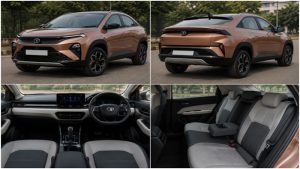
The Tata Curvv is a genuinely new kind of car for the Indian market, a coupe-SUV that combines a sloping roofline with SUV proportions, a body style that Tata has used to signal its intentions to move beyond the utilitarian-meets-practical positioning that defined its earlier portfolio. Launched in 2024, the Curvv is now beginning to appear in the pre-owned market in small numbers as first-year buyers sell or upgrade, and what these early listings reveal is instructive for anyone considering a used purchase. If you want to buy second hand car in this segment, browsing current second hand Tata Curvv listings shows you what early owners are pricing their cars at, which is useful context for any negotiation.
What the Curvv Actually Is
First, a quick technical orientation. The Curvv ICE (Internal Combustion Engine) version comes with two powertrain options: a 1.2-litre three-cylinder Hyperion turbo-petrol engine making 123ps and 225Nm, and a 1.5-litre diesel making 120ps and 260Nm. Both are paired with 6-speed transmissions, manual for the diesel, manual or automatic torque converter for the petrol. The Curvv EV, which is the version that launched first and attracted more initial attention, uses the active platform with 45kWh and 55kWh battery options and is priced in a separate bracket entirely.
Why are early Curvv ICE units appearing in the used market? Several reasons apply to any new car segment, some buyers purchase a car at launch and find that it doesn’t suit their actual needs after a few months of daily use. A coupe-SUV’s sloping roofline, while aesthetically distinctive, does compromise rear headroom for taller passengers, a trade-off some buyers only fully appreciate after living with the car. Others are upgrading to the Curvv EV or another model after an early-mover purchase.
What to Check on Early Used Listings
For prospective buyers, these early listings offer an interesting opportunity: a very new, very modern car at a modest discount to new car prices, without the configuration limitations that come with factory order queues. The 1.2-litre turbo-petrol in particular has drawn positive feedback for its responsiveness in the mid-range, the 225Nm torque figure for an engine this size gives the car a liveliness that buyers moving up from naturally aspirated engines find notably different.
What to check on a used Curvv: The 1.2-litre turbo engine is new and doesn’t have the long field track record of proven engines like the 1.5-litre diesel or the older K-series family. Ask for the complete service record (even a new car needs its first service at 7,500 or 10,000 km, depending on variant) to confirm early maintenance was done correctly. Check for any software updates that Tata may have issued, the Curvv is equipped with Tata’s latest ADAS suite (Level 2 autonomous features) and the connected car platform, and software updates address bugs identified post-launch.
The ADAS system, which includes adaptive cruise control, lane keep assist, and automatic emergency braking, needs verification that all cameras and sensors are functioning correctly. These systems can be disrupted by even minor front-end impacts, and a car this new shouldn’t have had any, but confirm anyway.
If you’re in the market to buy second hand car and you’re drawn to something modern with a design statement, the Curvv in the used market offers access to 2024-spec technology at a price below new. Just ensure the car has a full, verified service record from a Tata authorised centre.
The Curvv’s coupe-SUV body style creates a specific trade-off that early listings confirm is the most common source of buyer regret. The sloping roofline reduces rear headroom meaningfully compared to a conventional SUV like the Nexon or Creta, passengers above 5’10” will find the head clearance uncomfortable on longer journeys. If your rear passengers are tall, verify headroom in person during the test drive before committing. The front seats have no such limitation, and driver comfort is excellent.
For second hand Tata Curvv listings specifically, expect pricing to be close to new car ex-showroom in the near term, these cars haven’t had enough time in the market to depreciate significantly, but buyers who want a nearly new example of a very current model will find that proximity to new pricing justified by the car’s specification.
Boot access on the Curvv is also slightly more restricted than a conventional SUV, because the sloping tail reduces the height of the aperture. Large, rigid items may require more manoeuvring to load than the 500-litre boot capacity number alone suggests. For buyers who frequently load large items, bicycles, golf bags, surfboards, this is worth understanding before purchase.
The positive flip side of these trade-offs is that the Curvv delivers a driving experience that’s more dynamic and planted than its conventional siblings. The low-roofline-related lower centre of gravity, combined with the suspension tuning, gives the car a confidence in corners that the Nexon and Punch don’t quite match.
Share:














Indore (HO)
Bhopal
Jabalpur


©2026 Agnibaan , All Rights Reserved