
Washington: Tensions between the United States and Iran have surged after the US military said it destroyed or disabled five Iranian oil tankers linked to an oil network allegedly controlled by Iran’s Islamic Revolutionary Guard Corps (IRGC). The strikes came after Iran reportedly launched two ballistic-missile attacks against a US Navy vessel.
According to the US Central Command (CENTCOM), Iranian forces fired ballistic missiles at a US Navy ship on two occasions over the past two days. The vessel survived both attacks and continued its operations, with no US personnel reported injured.
The US military said the failed Iranian attacks were followed by retaliatory strikes on five tankers. Four vessels—the M/T Kaviz, M/T Charminar, M/T Horizon 1 and M/T Riesco—were targeted in the Gulf of Oman. A fifth vessel, the M/T Derya, was struck near Iran’s strategically important Kharg Island.
CENTCOM said the crews were ordered to evacuate before the strikes and that the vessels were subsequently rendered inoperable.
US Claims Tanker Network Financed IRGC
The US military has described the targeted vessels as part of a major Iranian oil network that allegedly generates billions of dollars in revenue for the IRGC and affiliated organizations.
Washington has previously targeted tankers associated with Iran. CENTCOM said three Iranian crude-oil tankers were also targeted on September 5, following what the US described as attempted attacks by the IRGC on a US aircraft carrier and a missile-equipped US warship.
Iranian media have also reported the latest strikes. Tasnim News Agency said a tanker near Kharg Island was hit by a US missile, while Iranian state television reported an attack on another tanker in the Gulf of Oman near Jask.
Iranian reports said the crews of the affected vessels were safely evacuated and did not report casualties. However, Iranian media have not independently confirmed the US military’s claim that five tankers were destroyed or disabled.
IRGC Threatens Tankers in Kuwait and Bahrain
Following the strikes, Iran’s Revolutionary Guards issued a warning to oil tankers operating near ports in Kuwait and Bahrain, where the US military maintains a presence.
The IRGC reportedly warned that tankers in the area could become targets and urged their crews to leave.
The threat has raised fresh concerns over the security of oil shipments across the Gulf, particularly around the Strait of Hormuz, one of the world’s most critical oil-transit routes.
With tensions escalating, commercial maritime traffic through the region has reportedly been severely disrupted, raising fears of further supply shocks.
Oil Prices Near $100 as Gulf Tensions Mount
The crisis is already weighing on global energy markets, with crude oil prices approaching $100 a barrel. A prolonged confrontation could put additional pressure on petrol and diesel prices in several countries.
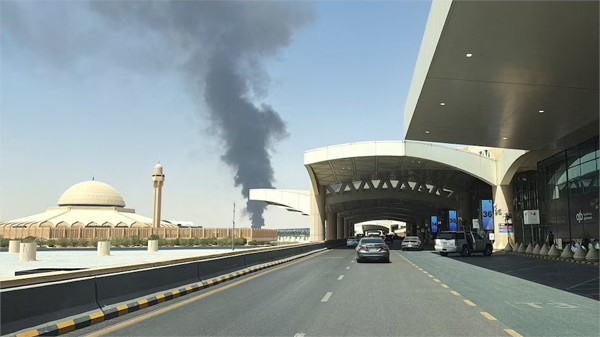
The conflict has also spilled beyond the immediate US-Iran confrontation. Iran-backed Houthi rebels reportedly launched drone and missile attacks on four locations in southern Saudi Arabia.
The Houthis claimed they targeted a military base in Khamis Mushait, along with oil-related facilities in Abha, Najran and Jazan. Fires were reported at several locations. Saudi authorities said 73 people, including women and children, were injured.
US President Donald Trump has not yet publicly commented on the latest attacks. However, US Defense Secretary Pete Hegseth had previously warned that attacks on US vessels would trigger strikes against Iranian oil tankers.
With Washington targeting Iranian oil assets and Tehran threatening vessels operating near US military positions, fears are growing that the confrontation could further disrupt Gulf shipping, global oil supplies and maritime trade in the days ahead.
Share:













Indore (HO)
Bhopal
Jabalpur


©2026 Agnibaan , All Rights Reserved