
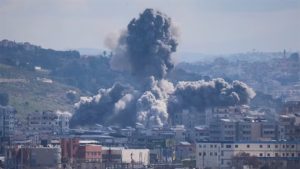
New Delhi: Amidst efforts to end the conflict with Iran and establish lasting peace in the region, Israel has clearly signaled that it has no intention of withdrawing its troops from Lebanon. Israeli Finance Minister Bezalel Smotrich stated that the Israeli military would remain deployed in the security zone in southern Lebanon for years to come and would not retreat, even under US pressure.
In an interview, Smotrich said that Israel would not alter its stance until Hezbollah completely lays down its arms. He claimed that the US understands Israel’s “red lines” and does not believe Washington would make a formal demand for a troop withdrawal.
Smotrich stated that Israel might develop permanent military infrastructure and bases within the security zone, rather than just temporary outposts. According to him, the current border arrangement fails to meet Israel’s security needs, and the country requires “defensively secure borders.”
The Israeli leader emphasized, “We will not retreat even a single millimeter until Hezbollah lays down its arms.” Smotrich claimed that Prime Minister Benjamin Netanyahu and the Defense Minister share his view on this matter.
Meanwhile, crucial talks aimed at implementing the Iran-US agreement are set to begin in Switzerland. US Vice President JD Vance has also arrived in Switzerland to participate in the discussions. It is expected that both sides will deliberate on various aspects of the ceasefire and the agreement over the coming days.
The Swiss Foreign Ministry has confirmed that the Iranian delegation has also arrived in Switzerland. The meeting, scheduled to take place at the Bürgenstock Resort, is considered pivotal for advancing the recently concluded agreement between the US and Iran.
However, new tensions appear to be emerging even before the talks have commenced. Iran has once again threatened to close the Strait of Hormuz, even as tensions between Israel and Hezbollah in Lebanon have not fully subsided. Against this backdrop, the entire world is watching the talks in Switzerland, as these negotiations could determine whether the path toward peace in West Asia moves forward or war erupts in the region once again.
Share:













Indore (HO)
Bhopal
Jabalpur


©2026 Agnibaan , All Rights Reserved