
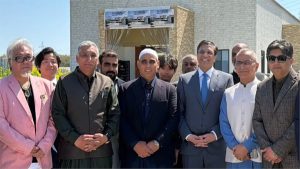
New Delhi: A mosque constructed in the city of Kawagoe, located in Japan’s Saitama Prefecture, has become embroiled in controversy. Built by the Pakistani community, the mosque was inaugurated in the presence of Pakistan’s Ambassador to Japan, Abdul Hamid. Now, the threat of demolition looms over the structure. Local authorities have discovered that the mosque was built without the necessary permits and lacked legal authorization.
Adopting a firm stance on the matter, the Kawagoe City Hall stated that the area where the mosque was constructed falls under an “Urban Development Control Area.” In such zones, any form of construction activity is prohibited unless special permission has been obtained.
Construction Undertaken Without Local Administrative Approval
An official statement issued by the City Hall noted: “The construction of the building in question was undertaken without obtaining the necessary permits required under the City Planning Act. This construction proceeded without the approval of local authorities, constituting a violation of the law.”
According to the administration, those involved in the construction were provided with guidelines regarding legal procedures and necessary remedial measures over an extended period. Despite this, the regulations were not adhered to. Consequently, demands for the demolition of the mosque are now being raised by concerned parties, and these demands are currently under review.
Pakistani Embassy Distances Itself from the Matter
This controversy has also placed the Embassy of Pakistan in an awkward position. Following the revelation of the issue, the Tokyo-based Pakistani Embassy publicly distanced itself from the project, stating that it has no association with any construction activity that fails to comply with Japanese laws.
On June 1, the Embassy issued a statement on the social media platform ‘X’ (formerly Twitter), appealing to the Pakistani community residing in Japan to strictly adhere to Japanese laws in all matters—particularly regarding the construction of religious sites. The Embassy stated, “No construction project should be initiated without obtaining the necessary permits from the local administration.”
The Pakistani Embassy also clarified that Pakistan’s Ambassador, Abdul Hamid, participated in the mosque’s inauguration ceremony on April 3 because he had been informed that all permits required for the construction under Japanese laws had been secured.
Mosque Inauguration Held in Kawagoe on April 3, 2026
In another statement issued on May 31, the Embassy reiterated that obtaining the necessary clearance from the local administration is mandatory before commencing any project. The statement read, “The Embassy of Pakistan has no association with any project that does not comply with local laws. The Ambassador participated in the event held in Kawagoe on April 3, 2026, based on the information provided to him, which indicated that all necessary permits had been obtained.”
The Embassy also appealed to members of the community to cooperate with the local administration and to respect Japanese laws. Furthermore, it stated that legal information regarding such projects should be disseminated not only to community members but also to the local residents living in the vicinity.
Crisis Looms Over the Mosque’s Future; Threat of Demolition Hangs in the Balance
Meanwhile, the Kawagoe administration has indicated that it is keeping a close watch on the matter and is considering further action in coordination with various agencies. Officials state that since the construction was carried out without permission, it remains unclear whether surrounding residents were provided with adequate information prior to the mosque’s construction.
This particular aspect is rendering the dispute even more sensitive. In Japan, establishing a dialogue with the local community and neighbors prior to any major construction work is considered crucial from both a social and administrative perspective—particularly in the case of structures that may impact the social or cultural fabric of a locality.
Currently, the mosque remains standing at its location, but its future remains uncertain. Whether the mosque is saved by granting it legal recognition or is ultimately demolished will depend entirely on the decision of the Kawagoe city administration and relevant bodies.
Share:













Indore (HO)
Bhopal
Jabalpur


©2026 Agnibaan , All Rights Reserved