
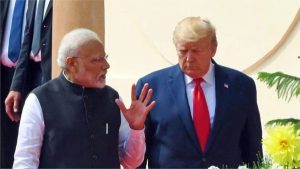
New Delhi. US has officially announced to impose 50 percent tariff on Indian goods. US Department of Homeland Security has issued a notice to India in this regard. It is written in it that America will impose an additional 25 percent tariff on Indian goods from 12:01 am on August 27 (local time). And this will be a total of 50 percent including the existing 25 percent tariff.
In such a situation, when this tariff will be imposed in America on August 27 at 12:01 am, it will be 9:30 am in India. It is also written in this notice that if any Indian goods reach America even one second after the stipulated time, then the new tariff rates will be applicable on it, which are 50 percent. Apart from this, it is also written that an additional 25 percent tariff has been imposed on India because India has continued to buy crude oil from Russia, which is a threat to America.
On which items will 50 percent tariff be imposed?
Now it is necessary to understand on which items the 50 percent tariff imposed on India is going to be applicable. And what will be its effect. Actually, earlier there was a 9 percent tariff on Indian clothes, which will now become 59 percent after the 50 percent tariff. Similarly, there was a 13.9 percent tariff on readymade clothes, which will now become 63.9 percent. India’s highest number of 4.5 crore people work in this sector and this is a labor intensive sector, due to which it can affect the employment of 5 to 7 percent workers. Its effect will be more visible on textile factories in Tirupur in Tamil Nadu, Surat in Gujarat, Ludhiana in Punjab and Mumbai, Thane and Navi Mumbai.
Apart from this, steel, aluminium and copper earlier had a tariff of 1.7 percent but now a tariff of 51.7 percent will be imposed. And more than 55 lakh people work in this sector too. This tariff will not affect all these people but some percentage of traders and workers may be affected. Furniture, bedding and mattresses earlier had a tariff of 2.3 percent but now a total of 52.3 percent tariff will be imposed and 48 lakh people work in this sector too.
Now this much tariff on export of shrimps
Earlier there was no tariff on export of shrimps but now a tariff of 50 percent will be imposed on them too and 15 lakh farmers in India are associated with the shrimp trade. Diamonds, gold and other related goods used to have a tariff of 2.1 percent but from now a tariff of 52 percent will be imposed on them too and 50 lakh people work in this sector too. Machinery and mechanical appliances used to have a tariff of 1.3 percent but now a tariff of 51.3 percent will be imposed.
Earlier, 1 percent tariff was levied on vehicles and their spare parts and the additional 25 percent tariff has not been applied on this and for now, 26 percent tariff will be applied on these goods and 3 crore people work in this sector too. Not all people’s employment will be affected but some impact can be seen.
Smartphones and Indian medicines have been kept out of the purview of 50 percent tariff. But America has threatened that it can apply new tariff rates on these too after some time.
Tariff will make Indian products expensive in America
Federation of Indian Export Organisations has expressed concern over these new tariff rates. This organization says that America has been the biggest export partner for India till now. We send 18 percent of our export goods to America alone and in such a situation, due to 50 percent tariff, Indian goods will now become very expensive in the American markets.
Due to the increase in prices, goods from China, Vietnam, Cambodia, Philippines, Bangladesh and other Asian countries will benefit and these countries will easily replace Indian goods in the US market. The reason is that less tariff has been imposed on these countries than India. 30 percent tariff has been imposed on China, 20 percent on Vietnam, 19 percent on Cambodia, 19 percent on Philippines and 20 percent on Bangladesh.
The organization made these five demands to the government
To reduce the impact of tariff, this organization has made five demands to the government. Immediate financial help should be given to small traders and small industries. They should be provided cheap loans and easy credit. There should be a grace period of 1 year on repayment of interest and principal amount of loan. Affected companies should be given loans without guarantee. Free trade agreements should be made with new countries as soon as possible. Especially such agreements should be made with European Union, Oman, Chile, Peru, Africa and Latin American countries so that India can sell its goods going to America in the markets of these countries.
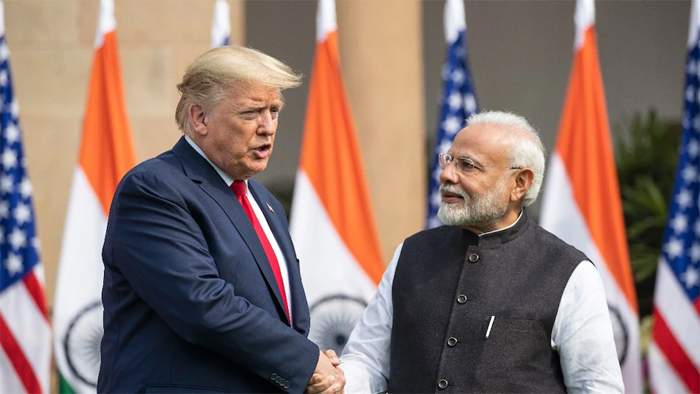
The last demand is that Brand India should be strengthened at the global level so that Made in India Indian goods can become attractive. This is an important thing, on which Prime Minister Modi has also made a special appeal to all the shopkeepers and businessmen of India. He had said in the rally of Gujarat that to promote indigenous goods, shopkeepers should put a board outside their shop, on which it should be written that indigenous goods made in India are available there.
Made in China is written outside the shops of these countries…
In China, campaigns are run at the government and private level to promote Made in China, in which it is written on shops and online platforms that 100 percent Chinese Products or Support Domestic Goods. In Japan too, Made in Japan labels are often prominently displayed on shops. While in South Korea, boards like Buy Korean are installed. In America, boards with Buy American, Made in America and Proudly Made in USA are installed on shops. While in Italy, Made in Italy is written on a big board outside many stores and shops and Made in Germany too and in Vietnam too, Vietnamese Products Only is written on the board outside many shops and markets, due to which the people there strengthen the traders and economy of their country.
Buying Made in India goods will be a big benefit to the country
Now the same should happen in India too. The reason for this is that India’s economy does not depend on exports but on domestic consumption. The domestic consumption of goods in our country determines the entire direction of our economy. That is why if from today you will use goods made in India, buy every small and big thing after checking whether it is made in India or outside India, then our economy will move forward rapidly on the path of self-reliance and then no tariff will be able to harm us.
However, the government will also have to do a lot of work here. Currently, the share of our manufacturing sector in India’s GDP is 17 percent, whereas the share of China’s manufacturing sector is 26 percent, Germany’s is 20 percent, Japan’s is also 20 percent and the share of South Korea’s manufacturing sector in its GDP is 24 percent. Therefore, if the people of India are to be encouraged to buy indigenous goods, then the production of indigenous goods will have to be increased in India itself. And the government will also have to work especially on their quality.
Share:









Indore (HO)
Bhopal
Jabalpur


©2026 Agnibaan , All Rights Reserved