
New Delhi: The devastating flash floods in Nepal have once again brought the global debate over climate change, historical responsibility and compensation for vulnerable countries into focus.
Nepal Foreign Minister Shishir Khanal had earlier said that although Nepal’s contribution to global greenhouse gas emissions is negligible, the country is bearing a heavy cost of the climate crisis. He urged the world’s three largest greenhouse gas emitters—China, the United States and India—to acknowledge their historical responsibility and support countries like Nepal facing the worst impacts of climate change.
Khanal had described such support not as “charity” but as a legal and moral obligation of countries that have historically contributed significantly to global emissions.
However, the Nepalese Foreign Minister later clarified his remarks. He said that neither the Government of Nepal nor he personally had made a specific demand for compensation from India, China or the United States. Instead, his appeal was aimed at the international community to recognize the growing impact of climate change and provide long-term cooperation and support to vulnerable nations.
India Calls Climate Change a Shared Challenge
India’s Ministry of External Affairs (MEA) has also made its position clear on the issue.
MEA spokesperson Randhir Jaiswal said India has consistently maintained that climate change is a shared global challenge. According to him, efforts to address the crisis must follow the principle of “common but differentiated responsibilities and respective capabilities.”
Jaiswal stressed that developed countries, which bear greater historical responsibility for global emissions, need to play a leading role in tackling climate change.
He said these nations must not only reduce their own emissions but also help developing countries by providing financial support and access to technology.
More Than 1,200 People Killed in Nepal Floods
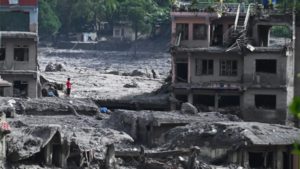
The flash floods have caused widespread devastation across Nepal. More than 1,200 people have reportedly lost their lives, while thousands remain missing. Large numbers of people have been affected, with rescue and relief operations continuing in several areas.
India has expressed solidarity with the people and Government of Nepal during the crisis. The MEA said that as a close friend and partner, India responded promptly and provided support to Nepal.
The Ministry further stated that India will continue to cooperate with Nepal in its relief, recovery and reconstruction efforts.
The latest developments have once again highlighted the wider question of who should bear the financial burden of climate-related disasters—and how the international community can better support countries that are highly vulnerable to climate change despite having contributed relatively little to global emissions.
Share:











Indore (HO)
Bhopal
Jabalpur


©2026 Agnibaan , All Rights Reserved