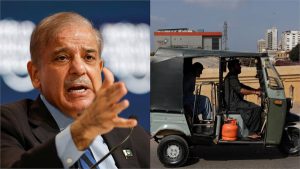
New Delhi. Pakistan’s woes show no signs of ending. As the country continues to grapple with a long-standing economic crisis and a mounting debt burden, a major new crisis has emerged: an LPG shortage. With supplies from the Iranian border halted, LPG prices in Pakistan have skyrocketed, severely impacting the country’s rickshaw drivers, who are now being forced to cut back even on their own food. The situation is particularly dire in Lahore, where most rickshaws run on LPG.
The Iran Connection to Pakistan’s Gas Crisis
This fresh LPG crisis in Pakistan is directly linked to Iran. The closure of the Iranian border is proving extremely costly for the Shehbaz Sharif-led government. With the border shut, trucks—including those carrying LPG tankers—have been left stranded, and the resulting gas shortage has caused LPG cylinder prices to soar. According to the Pakistan LPG Association, the country previously imported approximately 7,000 metric tons of LPG daily from Iran; these imports have now ceased.
12kg LPG Cylinder Costs 7,000 Rupees
Pakistani traders report that LPG prices have been rising steadily since October 17, following the closure of two border crossings with Iran, which brought LPG imports to a standstill. This marks the latest and most significant energy shock since the onset of the US-Iran conflict in February. Traders noted that within days of the border closure, the price of a 12kg LPG cylinder surged by 56% to 7,000 Pakistani rupees. In the open market, LPG is currently retailing at approximately 583 rupees per kilogram. Rickshaw Drivers Forced to Cut Back on Food
According to a Reuters report, Rashid Ali—who has been driving a three-wheeled motorized rickshaw in Lahore, Pakistan, for the past 13 years—describes the hardships caused by the LPG crisis. He explains that his workday begins at 6:00 AM and sometimes stretches until midnight. Previously, he could earn $6.50 (approximately 1,800 Pakistani rupees) a day, which was sufficient to cover his family’s basic needs. However, with the surge in LPG prices, he is now unable to earn even half that amount. 33-year-old Ali is one of thousands of Pakistani rickshaw drivers who fuel their vehicles with LPG—the same gas used for cooking.
Ali says he now earns only $3 a day, forcing his family to reduce their food consumption. He notes that it has become impossible to make ends meet due to the high cost of LPG. Furthermore, he faces the additional challenge that passengers are unwilling to pay higher fares, despite the rising cost of fuel. According to Ali, for a trip that should cost 200 to 250 rupees, passengers are only willing to pay 80, 100, or at most 150 rupees.
A Blow to the ‘Fuel of the Poor’; Passengers Also Affected
Majid Ghouri, Chairman of the Awami Rickshaw Union, refers to LPG as the “fuel of the poor.” He states that the union represents 43,000 auto-rickshaws—about 70% of which, along with approximately 8,000 ‘Qingqi’ (three-wheelers), run on LPG. While the spike in LPG prices has hit rickshaw drivers hard, passengers are also facing significant difficulties. A Reuters report cites a local passenger, Mohammad Ramzan, who recounted that when a driver demanded 500 rupees for a ride within the city, he offered to pay half that amount—to which the driver flatly refused.
Multiple Crises Facing Pakistan
The LPG crisis is not the only trouble Pakistan is grappling with; rather, a series of compounding crises is pushing the country to its breaking point. In October, Pakistan’s inflation rate surged to 9.6%, and just last week, the country’s central bank raised interest rates to 12%, citing rising energy and wheat prices. Meanwhile, the costs of petrol and high-speed diesel have already climbed by 40%, partly due to the tensions between the United States and Iran.
Share:










Indore (HO)
Bhopal
Jabalpur


©2026 Agnibaan , All Rights Reserved