
New Delhi: In a major boost for agriculture in the water-scarce region of Ladakh, nearly 90 million litres of glacial meltwater every day will now be diverted to agricultural fields, benefiting around 12 villages and more than 1,000 acres of farmland.
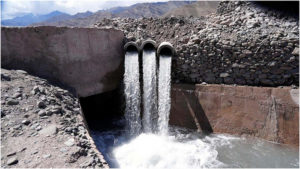
Water flowing through a stream in Stok village near Leh has been diverted into the 43-kilometre-long Igu-Phey irrigation canal. The move is expected to provide much-needed relief to farmers whose fields have traditionally remained dry because of limited water availability.
Glacial Water That Once Flowed Away Will Now Irrigate Fields
Until now, a significant portion of the glacial meltwater flowing through Stok eventually drained into the Indus River without being used for agriculture. Small diversion channels constructed on August 14 are now directing the water into the irrigation canal.
As a result, the canal’s water flow has reportedly increased from around 1,415 litres per second to 2,123 litres per second or more, substantially improving water availability for farming.
12 Villages and Over 1,000 Acres to Benefit
The additional water is expected to benefit farmers across approximately 12 villages, making it easier to irrigate more than 1,000 acres of agricultural land.
Previously, limited water in the canal meant farmers had to depend on fixed irrigation schedules and wait for their designated turn. The increased flow is expected to reduce those difficulties and allow more farmland to receive adequate irrigation.
90 Million Litres of Water Available Every Day
Officials estimate that the glacial meltwater entering the Stok stream amounts to approximately 90 million litres a day. With Ladakh receiving very little rainfall and facing harsh climatic conditions, reliable irrigation water remains one of the biggest challenges for agriculture in the region.
By diverting this water into the irrigation network, authorities aim to convert a previously underutilised natural resource into a dependable source for farmers.
Ladakh Plans to Replicate the Model
The Ladakh administration is now considering similar measures in other areas to make greater use of glacial meltwater and water flowing through local drains.
Lieutenant Governor Vinai Kumar Saxena has described the initiative as an important step towards water conservation and strengthening agriculture. Authorities are also exploring ways to divert water from other drainage channels to increase irrigation coverage.
The initiative could offer a practical solution to Ladakh’s chronic water shortage by ensuring that more of its naturally available glacial meltwater reaches farms instead of flowing away unused.
Share:










Indore (HO)
Bhopal
Jabalpur


©2026 Agnibaan , All Rights Reserved