

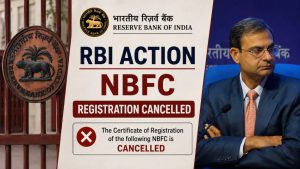
New Delhi: The Reserve Bank of India (RBI) has taken significant action. The central bank has, with immediate effect, cancelled the Certificate of Registration (CoR)—or registration certificate—of 150 Non-Banking Financial Companies (NBFCs) across the country.
Greatest Impact on Delhi and West Bengal
Essentially, the RBI has initiated a major crackdown against NBFCs found to be disregarding regulations. The list released by the RBI reveals that the majority of the 150 companies whose registrations were cancelled were operating out of just two states.
West Bengal accounts for the highest number of cancellations, with the registrations of approximately 75 NBFCs from the state being revoked. Meanwhile, the registrations of around 67 companies from Delhi have been terminated. In addition to Delhi and West Bengal, the list includes companies from Telangana, Karnataka, Madhya Pradesh, Bihar, and Haryana.
Why Was This Strict Step Taken?
The RBI took this step by exercising the powers vested in it under Section 45-IA (6) of the Reserve Bank of India Act, 1934. Typically, the Reserve Bank initiates such action when companies fail to adhere to prescribed financial parameters (such as Minimum Net Owned Funds), rules, and regulatory guidelines, or when they are found to have remained dormant for an extended period. The companies whose registrations have been cancelled are involved in lending, leasing, investment, and other financial activities.
What Will Be the Impact on These Companies Now?
According to RBI regulations, following the cancellation of their registration, all these 150 companies will no longer be permitted to conduct business as any form of ‘Non-Banking Financial Institution’ (NBFI) under Clause (a) of Section 45-I of the RBI Act, 1934. These companies are now prohibited from accepting fresh deposits from the general public or the market, as well as from offering any form of loans or financial services.
What is an NBFC?
Non-Banking Financial Companies (NBFCs) are financial institutions that engage in activities similar to those of commercial banks—such as extending loans, investing in shares and bonds, and providing other financial services. However, they do not hold a traditional banking license, nor can they accept demand deposits (such as savings or current accounts) in the manner of conventional banks. Their entire operations are fully regulated and controlled by the RBI.
Share:














Indore (HO)
Bhopal
Jabalpur


©2026 Agnibaan , All Rights Reserved