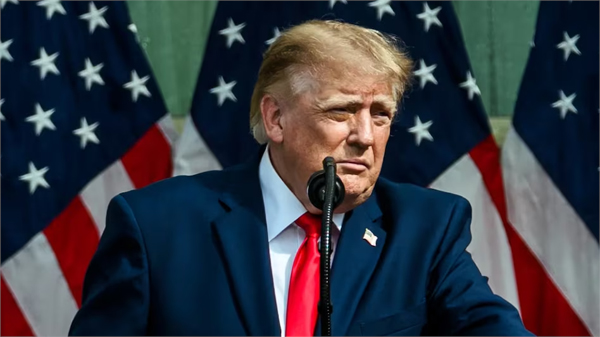

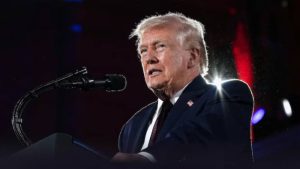
New Delhi: US President Donald Trump is scheduled to address the nation on the morning of April 2 (Indian Standard Time), during which he is expected to make an announcement regarding the conclusion of the ongoing conflict with Iran. Trump recently signaled that the United States has achieved its military objectives and that it makes no difference to him whether the Strait of Hormuz remains open or closed.
Meanwhile, on March 31, 2026, following high-level discussions in Beijing, China and Pakistan proposed a five-point peace initiative. Presented by Pakistani Foreign Minister Ishaq Dar and Chinese Foreign Minister Wang Yi, this plan emphasizes the need for an immediate ceasefire and the commencement of peace negotiations.
However, while Iran has opposed the idea of Pakistan acting as a direct mediator with the United States, it has welcomed the regional appeal to bring an end to the conflict. All eyes are now fixed on Trump’s address to see whether he will conclude the war by accepting this peace proposal or by declaring his own victory.
China and Pakistan’s Peace Formula
The plan announced in Beijing comprises five key points. First, it calls upon all parties to observe an immediate ceasefire. Second, it advocates for the initiation of peace talks, emphasizing diplomacy and dialogue as the sole viable option. Third, it demands a halt to attacks on civilian infrastructure, such as energy hubs and nuclear installations. Fourth, it seeks to ensure the safe passage of vessels through the Strait of Hormuz. And fifth, it aims to establish a peace framework grounded in international law, while simultaneously strengthening the principles of the United Nations Charter.
While China has endorsed Pakistan in the role of a mediator, Iran’s stance differs slightly. According to reports, Iran has declined to accept Pakistan as a direct mediator in its dealings with the United States. Nevertheless, Tehran has expressed support for the broader call to restore peace and end the conflict in the Middle East. This stance by Iran suggests that while it desires a diplomatic resolution, it remains extremely cautious regarding the selection of mediators.
Share:







Indore (HO)
Bhopal
Jabalpur


©2026 Agnibaan , All Rights Reserved