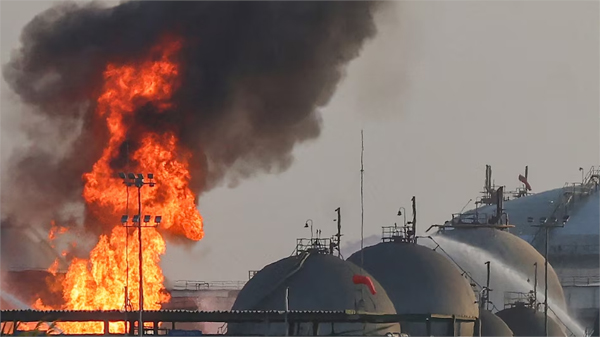


New Delhi: Talks between the United States and Iran regarding the Strait of Hormuz have reached an impasse. While the U.S. anticipates a severe impact from rising inflation, the specter of war in the Middle East—coupled with the American blockade—is taking a heavy toll on Iran. Data from the research firm Kpler appears to paint a clear picture of the unfolding crisis in Iran. According to reports, Iran’s reserves of unused crude oil storage have dwindled to a mere 22 days’ worth or less, even as available oil storage sites within the country are rapidly running out of capacity.
A Bloomberg report states that Iran’s unused oil storage capacity is now sufficient for only 22 days or less—a situation that constitutes a major crisis for the nation. Citing data from Kpler, the report highlights that sites for storing crude oil in Iran are fast approaching full capacity, thereby significantly heightening the risk of production cuts.
What Will Iran Do Now?
According to the report, the Islamic Republic possesses oil reserves sufficient to last for only another 12 to 22 days. Consequently, should tensions with the United States escalate further, the situation is expected to deteriorate even more. Given this decline in unused crude storage capacity, analysts anticipate that Iran may be forced to cut its daily crude oil production by an additional 1.5 million barrels by mid-May.
According to Goldman Sachs, this situation is particularly concerning for Iran given that it has already implemented production cuts totaling 2.5 million barrels per day.
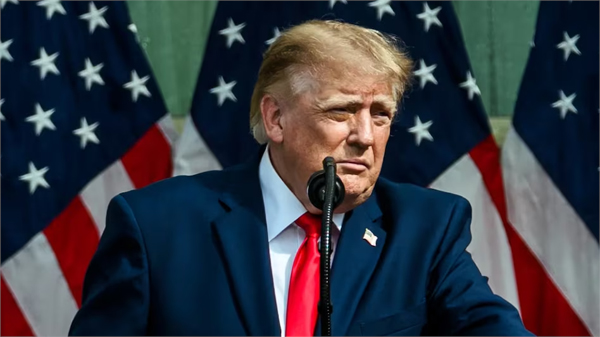
Furthermore, Iran’s crude oil exports have been in a continuous decline, dropping to a current level of 567,000 barrels per day (BPD)—a sharp contrast to the 1.85 million BPD recorded in March. Additionally, a massive decline of approximately 70 percent has been recorded in oil loading operations. All in all, the standoff with the United States is exacting a heavy toll on Iran. The crisis involving Iran has intensified further since the beginning of April, and Iranian crude exports have plummeted sharply. This follows an order issued by US President Donald Trump for a naval blockade of Iranian ports—a measure that remains in effect.
Trouble Mounts Due to Trump’s Blockade
The US-Iran conflict is taking a heavy toll not only on Iran but also on the United States itself. The surge in US gasoline and diesel prices has served to heighten President Donald Trump’s concerns. However, Trump appears unwilling to accept any proposals received from Iran. Meanwhile, the blockade imposed by the US President on Iranian ports continues to strike at Iran’s economic lifeline, exacerbating its difficulties—a reality underscored by the nation’s dwindling oil reserves.
The US blockade is proving to be highly effective; indeed, it appears that no oil or gas tanker is currently able to successfully navigate through the Strait of Hormuz. Shipping activity through Hormuz has declined precipitously, and the repercussions are being felt not only by Iran but also by other oil-producing nations across the Gulf region. Consequently, Saudi Arabia, Iraq, Kuwait, and the UAE are also scaling back their crude oil production in response to the escalating tensions in the Middle East.
Share:












Indore (HO)
Bhopal
Jabalpur


©2026 Agnibaan , All Rights Reserved