
New Delhi. Tensions between the United States and Iran appear to be escalating once again. US President Donald Trump has hinted at the possibility of further military action against Iran. In response, Iranian security officials have warned that if the US and Israel launch another attack, Iran could target undersea communication cables in the Gulf region. Such an action would likely disrupt internet services, financial transactions, and online business operations.
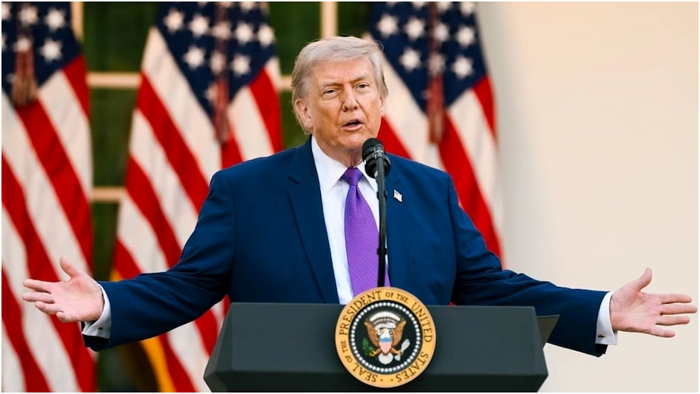
During a rally in Florida on Friday, Trump remarked that the US could carry out another “Little Epic Fury”—a reference to a US military operation against Iran that began on February 28. However, Trump did not specify when such potential military action might occur or what form it would take.
It remains unclear how long the conflict might continue. Meanwhile, there is growing concern regarding the impact of rising fuel prices and further attacks on regional stability and the global economy. Reports suggest that attacks by the US and Israel have resulted in thousands of deaths and the displacement of millions of people.
Trump claims the US could end the war quickly
On Friday, Trump stated that the US has the capability to bring the war to an end very quickly. However, he questioned whether it should be ended immediately or allowed to gradually fade away.
According to Trump, while the US possesses the capacity to conclude the conflict, the decision rests on whether to end it now or wait for it to wind down over time. He also claimed that the flow of oil through the Strait of Hormuz continues, and that the US is achieving all its objectives.
Trump has previously made various, sometimes conflicting, statements regarding the goals and the timeline of the conflict. Earlier this month, it was stated that the United States would not launch an attack on Iran before the upcoming U.S. midterm elections—elections that will determine control of the U.S. Congress.
Turkey and France warn against new military action
Amidst fears of a renewed attack on Iran, several nations have called for a de-escalation of tensions. On Friday, representatives from the United Kingdom, France, Germany, Turkey, Egypt, Pakistan, Saudi Arabia, and Italy met in Istanbul.
Turkish Foreign Minister Hakan Fidan stated that a new attack on Iran could further escalate tensions and risk spreading the conflict across the entire region. He emphasized that the path to resolving the conflict lies solely through dialogue and diplomacy.
French Foreign Minister Jean-Noël Barrot also warned against new military action, noting that rising tensions between Iran and the U.S. would benefit no one. He added that such a scenario could also have a severe impact on oil prices.
German official Johann Wadephul stated that Germany, France, and the United Kingdom are prepared to engage in talks with Iran to prevent it from acquiring nuclear weapons.
Iran’s warning: Subsea cables will not be safe
According to a report, two senior Iranian security officials have indicated that Iran has devised a plan to target subsea communication cables in the Gulf. The officials stated that in the event of a renewed attack on Iran, both military installations and underwater communication networks could become targets.
An official claimed that Iran has access to these cables and could destroy them. Yadollah Javani, deputy head for political affairs of the Iranian Revolutionary Guards, has also stated that if Iran’s infrastructure were to come under attack, Tehran could target seven major internet cables running beneath the Strait of Hormuz. This warning comes at a time when the Gulf region is critical not only for global energy supplies but also for international digital connectivity.
Severing the cables could disrupt internet and financial services.
Subsea communication cables carry approximately 99 percent of the world’s internet traffic. Although less than one percent of international bandwidth passes through the Strait of Hormuz, damage to multiple cables in this area could still slow down internet speeds and disrupt online services.
This could also impact financial transactions, online commerce, and cloud services. The severity of the damage would depend on how quickly internet traffic could be rerouted to alternative networks and the extent of the spare capacity available on those networks.
Repairing subsea cables during a conflict could also prove challenging. Restoration efforts could be significantly delayed due to rising insurance costs and difficulties in obtaining authorization for repair operations in the affected maritime zone.
Threat to the Gulf states’ technology investments.
Gulf nations are investing heavily in technological infrastructure to reduce their reliance on oil and emerge as major hubs for artificial intelligence (AI). As part of this strategy, they have also strengthened ties with American technology companies.
According to reports, two Amazon Web Services facilities in the United Arab Emirates were allegedly damaged during attacks involving Iran in March. Infrastructure near a facility in Bahrain also sustained damage.
However, alternative land-based routes for internet traffic are also available. Governments in the Gulf countries and American technology companies are investing in new infrastructure to strengthen their networks.
Microsoft plans to invest over $400 million by 2030 to enhance connectivity across the Middle East, both via undersea and terrestrial routes.
Should tensions between the United States and Iran escalate, the risks would no longer be confined to military installations and energy supplies; they could also extend to the region’s digital networks and technological investments.
Share:













Indore (HO)
Bhopal
Jabalpur


©2026 Agnibaan , All Rights Reserved