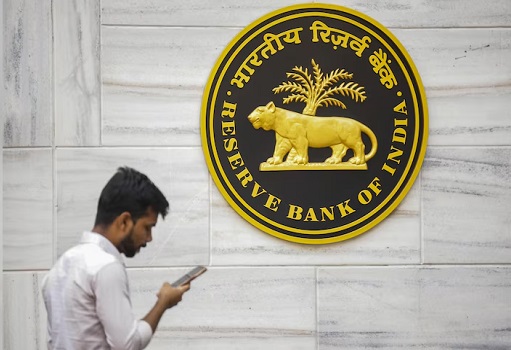


New Delhi. As of April 1, 2026, significant changes have been implemented in several key regulations governing our daily lives and financial transactions. Coinciding with the commencement of the new financial year, the Central Government, the RBI, and the Railways have put into effect these new provisions related to banking, taxation, and travel. These changes will have a direct impact on your monthly savings, spending habits, and digital security.
1- The New Math of Railway Ticket Cancellations and Refunds
The Railways have modified certain rules to enhance passenger convenience. Under the new regulations, a refund for a confirmed ticket will now be issued only if the ticket is cancelled at least 8 hours prior to the train’s scheduled departure. It is worth noting that the previous time limit for this was 4 hours. These rules come into effect starting April 1. The Railways believe that this rule will help reduce last-minute chaos and ensure that vacant seats become available to other needy passengers in a timely manner.
2- Major Relief in the Facility to Change Boarding Stations
There is good news for railway passengers: the deadline for changing one’s boarding point has now been extended. You will now be able to change your boarding station online up to just 30 minutes prior to the train’s scheduled departure time. Previously, this facility was available only until the reservation chart was prepared. Now, even if your plans change at the very last minute, your seat will remain secure, making your journey significantly more convenient than before.
3- FASTag Becomes More Expensive; Cash Payments Banned at Tolls
If you drive on highways, take note: the NHAI (National Highways Authority of India) has increased the price of the annual FASTag pass from ₹3,000 to ₹3,075. Furthermore, the facility for making cash payments at toll plazas has now been completely discontinued. You are now mandatorily required to make digital payments using FASTag, UPI, or a QR code. Insisting on paying in cash may now result in heavy fines or the payment of double the standard toll fee. These rules also come into effect starting today.
4- More Documents Required to Apply for a PAN Card
To enhance the security of PAN cards, relying solely on an Aadhaar card is no longer sufficient. Under the new regulations, applicants may now be required to submit additional documents—such as a Voter ID, Driving License, Passport, or Class 10 Marksheet—at the time of application. Another significant change is that the name printed on your PAN card will now strictly match the name recorded in your Aadhaar card. This measure aims to curb incidents of identity theft and the creation of fraudulent PAN cards.
5. UPI Withdrawals from ATMs Now Counted Towards Free Transaction Limit
If you withdraw cash from an ATM using UPI (Unified Payments Interface) without a physical card, take note. Banks will now count these transactions toward your monthly limit of ‘free ATM transactions.’ This means that once you have exhausted your free transaction limit, you will incur additional charges for any subsequent cash withdrawals made via UPI. This regulation has been introduced to regulate digital cash withdrawals and help control banking operational costs.
6. ‘Two-Factor Authentication’ Mandatory for Digital Payments
To combat online fraud, the RBI (Reserve Bank of India) has now mandated a second layer of security for all digital payments. ‘Two-Factor Authentication’ is now mandatory for every transaction. This implies that, in addition to an OTP (One-Time Password), you may now be required to use a PIN, biometric authentication, or Face ID to complete a transaction. Although this security feature is already inherent in UPI—thanks to PIN and SIM binding—it will now be strictly enforced across other digital wallets and payment gateways as well, ensuring that your funds remain secure under any circumstances.
7. New Income Tax Regime and Simplified Process
Effective today, a new income tax law has come into force across the country, replacing the previous complex system. The confusion surrounding the distinction between the ‘Financial Year’ and the ‘Assessment Year’ has now been eliminated, establishing a single ‘Tax Year’ instead. Providing significant relief to taxpayers, the government has extended the deadline for filing ITR-3 and ITR-4 to August 31. This will provide small business owners and professionals with the opportunity to file their tax returns on time and without any undue pressure.
Share:








Indore (HO)
Bhopal
Jabalpur


©2026 Agnibaan , All Rights Reserved