New Delhi: A new Merchant Discount Rate (MDR) on certain high-value UPI payments is set to come into effect from October 15, 2026, triggering a debate over whether digital payments will become costlier for ordinary users. Under the new framework, a 0.4% MDR will apply to specified Person-to-Merchant (P2M) UPI transactions above ₹2,000. However, the government has clarified that the charge is to be borne by merchants and payment ecosystem participants, not directly by consumers.
Will Common UPI Users Have to Pay More?
According to the Finance Ministry, UPI payments made directly between individuals will remain completely free, irrespective of the amount transferred. Payments to merchants up to ₹2,000 will also remain outside the new MDR framework. The government says roughly 96% of P2M UPI transactions will remain unaffected. For example, if a customer pays ₹10,000 to a merchant through UPI, the merchant-side MDR would work out to ₹40 under the 0.4% rate. The customer is not supposed to be charged this amount separately.
Finance Minister’s Clarification
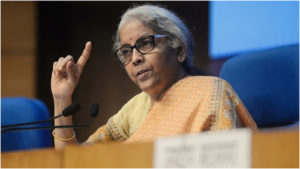
Union Finance Minister Nirmala Sitharaman has said the new MDR should not be interpreted as a tax or cess on UPI users. The government maintains that the charge is part of the payment ecosystem and is intended to support the operation, infrastructure, security and expansion of UPI. The MDR is distributed among participants such as banks and payment application providers rather than being collected as government tax revenue. The Finance Ministry has also directed banks and payment-system participants to ensure that merchants do not pass the MDR on to customers.
But Why Are Merchants Worried?
While consumers are not officially supposed to bear the charge, some merchants have raised concerns about its impact on their margins. The issue is particularly sensitive for sectors such as fuel retail, where dealers operate with relatively fixed margins. Petrol pump associations in states including Madhya Pradesh and Maharashtra have raised objections to the new MDR and sought exemptions for fuel transactions. This means the immediate impact on consumers may not necessarily come through a direct UPI fee. Instead, the bigger question is whether some merchants may restrict UPI acceptance for high-value purchases or encourage customers to use cash or other payment methods.
Special ₹5 MDR Categories
The new system does not apply the same MDR structure to every transaction. Certain categories—including fuel, railway tickets, telecom, insurance and other specified services—will attract a flat ₹5 MDR for eligible transactions instead of the standard 0.4% rate. Small merchants receiving up to ₹1 lakh per month through UPI QR payments are also covered under the zero-MDR framework.
₹300 Maximum MDR
For standard eligible merchant transactions, the 0.4% MDR is capped at ₹300 per transaction. The full ₹300 cap is reached at a payment value of ₹75,000; transactions above that amount do not attract a higher MDR.
So, Will UPI Become Expensive for the Common Man?
For now, the official framework does not impose a direct UPI fee on ordinary users. Person-to-person payments remain free, merchant payments up to ₹2,000 remain free, and merchants are not supposed to pass the MDR on to customers. However, the practical impact will depend on how merchants respond after October 15. Concerns from fuel dealers and other businesses indicate that some high-value transactions could face changes in payment preferences. The government has said it will monitor implementation to ensure that the merchant-side charge does not get transferred to consumers.
Share:










Indore (HO)
Bhopal
Jabalpur


©2026 Agnibaan , All Rights Reserved