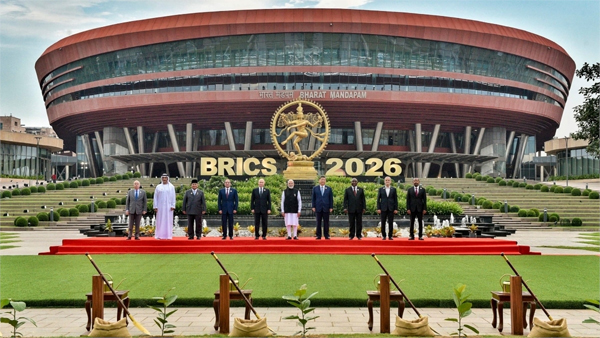

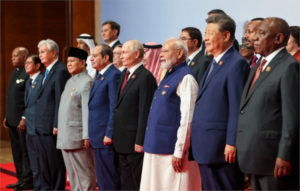
New Delhi: India’s two-day BRICS Summit on September 12 and 13 presented Prime Minister Narendra Modi with a difficult diplomatic challenge: keeping an increasingly diverse grouping united amid wars, geopolitical rivalries and sharply different national interests.
Russia is fighting Ukraine, Iran remains caught in escalating tensions involving the US and Israel, and BRICS members themselves have differed over the West Asia crisis. Yet, despite these divisions, India managed to secure the unanimous adoption of a joint declaration in New Delhi.
For India, the summit delivered several significant diplomatic gains — from securing a collective condemnation of the Pahalgam terror attack to keeping the bloc focused on the concerns of the Global South without turning BRICS into an explicitly anti-Western platform.
PM Modi also held 15 formal bilateral meetings during the summit. Here are five major diplomatic takeaways for India.
1. India Brings Iran and UAE Together
The West Asia crisis was arguably the biggest diplomatic challenge facing the summit. Iran and the UAE have differing positions on regional developments, and disagreements over West Asia had previously prevented BRICS foreign ministers from issuing a joint statement.
In New Delhi, however, both countries backed the joint declaration and its call for restraint.
A significant development followed on the sidelines of the summit, when Iranian President Masoud Pezeshkian met UAE Crown Prince Sheikh Khaled bin Mohamed bin Zayed Al Nahyan. The meeting was described as the highest-level interaction between the two countries since the conflict began.
India thus used the BRICS platform not only for collective diplomacy but also to facilitate dialogue between two countries with differing regional positions.
2. Modi Gets BRICS to Agree on a Joint Declaration
BRICS has become considerably more diverse following its expansion, bringing together countries with different political systems, economic priorities and foreign-policy positions.
Reaching consensus was therefore a major challenge.
Despite these differences, the New Delhi summit produced a unanimously adopted joint declaration covering areas including global governance, development, trade, digital technology, artificial intelligence and resilient supply chains.
The declaration also commended India’s BRICS presidency, giving New Delhi an additional diplomatic boost.
3. Pahalgam Attack Gets Mention in BRICS Declaration
One of India’s most important diplomatic objectives was securing a reference to the Pahalgam terror attack in the joint declaration.
The BRICS declaration strongly condemned the attack in Jammu and Kashmir and backed a “zero-tolerance” approach to terrorism. It also called for terrorists, their supporters and those involved in terrorist activities to be held accountable under the law.
Although Pakistan was not named, the Pahalgam incident was explicitly described as a terrorist attack.
For New Delhi, securing such language from a grouping that includes China was a significant diplomatic achievement.
4. BRICS Does Not Become an Explicitly Anti-US Bloc
Another major test for India was preventing BRICS from being defined primarily by its opposition to the United States and the West.
Russia remains under extensive Western sanctions, while China and the US continue to compete over trade, technology and global influence.
India instead pushed a broader agenda centred on the interests of developing nations. The summit declaration called for reforms in the United Nations and other global institutions, greater representation for developing countries and a more balanced international order.
The approach allowed India to amplify the voice of the Global South without turning BRICS into an overtly anti-American platform.
5. India Keeps a Divided BRICS Together
Perhaps India’s biggest achievement was maintaining consensus despite the bloc’s deep internal differences.
BRICS members have different political ideologies, economic interests and strategic partnerships. The Russia-Ukraine war and tensions involving Iran, Israel and the US further complicated the diplomatic landscape.
Yet the final declaration managed to accommodate these differences by emphasising restraint, dialogue and diplomacy on West Asia while focusing on areas of shared interest — including development, technology, finance, trade and supply chains.
India’s BRICS Test Is Over — China’s Begins Next
The New Delhi summit demonstrated that an expanded BRICS can still produce a common position despite major differences among its members.
India’s presidency therefore gave the grouping a distinct focus on Global South priorities, development and institutional reform, while avoiding a straightforward anti-Western posture.
The next test will come in 2027, when China assumes the BRICS presidency. The key question will be whether Beijing maintains the consensus-oriented approach India sought to establish — or gives the bloc a more sharply defined geopolitical direction.
Share:








Indore (HO)
Bhopal
Jabalpur


©2026 Agnibaan , All Rights Reserved