
New Delhi: Amidst the conflict involving Iran, the most reassuring news was the safe arrival of the vessels Shivalik and Nanda Devi in India; in this atmosphere of war, they reached Indian shores carrying thousands of metric tons of LPG. As these two ships were transiting through the Strait of Hormuz, the entire nation of India was praying for their safe return. But imagine, for a moment, the experience of those individuals who—amidst missiles and drones soaring through the skies—piloted the Nanda Devi all the way to India; what must that experience have been like for them? In this context, we spoke with a Merchant Navy officer who was aboard the Nanda Devi at the time, navigating through an atmosphere of fear and a moment of crisis to bring the vital LPG cargo back home.
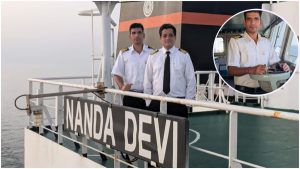
We discussed this matter with Krishna Godara, the Chief Officer of the Nanda Devi, who described the prevailing atmosphere as the ship made its passage through the Strait of Hormuz. Krishna Godara hails from Fatehabad, Haryana.
[Related Post]
He explained that while he has been sailing ships for a long time, the atmosphere on this particular voyage was unlike any other. This time, there was a palpable fear that something might go wrong. In a war-like situation, the threat of missiles and drones looms large; however, they have now successfully reached India without encountering any mishaps. The most challenging aspect of this journey was the pervasive atmosphere of fear. When asked if there was any panic regarding the need to reach their destination quickly, Godara clarified that there was nothing of the sort. It was simply the anxiety inherent to a wartime situation—a period that was, admittedly, somewhat difficult to endure.
How long were you stationed there?
He has been aboard the Nanda Devi for approximately four months. They arrived in the region on the 27th of the month, and the ship remained at anchor for 13 days—meaning they were effectively held up there. Subsequently, on the 13th, they received their LPG cargo from Qatar and set sail for India. They finally reached India on March 17th. He remains aboard the ship to this day. Additionally, in a video message, he expressed his gratitude to the individuals involved in the operation to escort the Nanda Devi across the Strait of Hormuz. He also extended his thanks to the Government of India, the Shipping Corporation of India, and the Indian Navy for their assistance in facilitating the Nanda Devi’s passage through the Strait of Hormuz. This video has since gone viral. Furthermore, he characterized questions regarding assistance from the Iranian Navy and related matters as confidential.
It is worth noting that the Nanda Devi was carrying a cargo of over 47,000 metric tons of Liquefied Petroleum Gas (LPG). The vessel arrived at the Vadinar port in Gujarat. Amidst the deepening crisis in the Middle East, this was the second ship to traverse the Strait of Hormuz. Officials estimated that this single vessel could fulfill approximately one day’s worth of India’s total LPG import requirements. There were 24 Indian-flagged vessels present in the Persian Gulf; of these, two ships—the Shivalik and the Nanda Devi—have safely returned to India. Following the Nanda Devi’s arrival at the Gujarat port, 24,000 metric tons of LPG were dispatched to Tamil Nadu.
Share:













Indore (HO)
Bhopal
Jabalpur


©2026 Agnibaan , All Rights Reserved